

Published :
Updated :
 For all latest news, follow The Financial Express Google News channel.
A high-level meeting chaired by Chief Adviser Muhammad Yunus and held at the state guest house Jamuna on Sunday last emphasised the need for making foods safe for consumption. Indeed, food safety is a much neglected issue in this country. Admittedly, the burgeoning food production was impossible without the adoption of advanced farm technology and methods. In 1971, the year when this country emerged independent, its population was between 70-71 million.
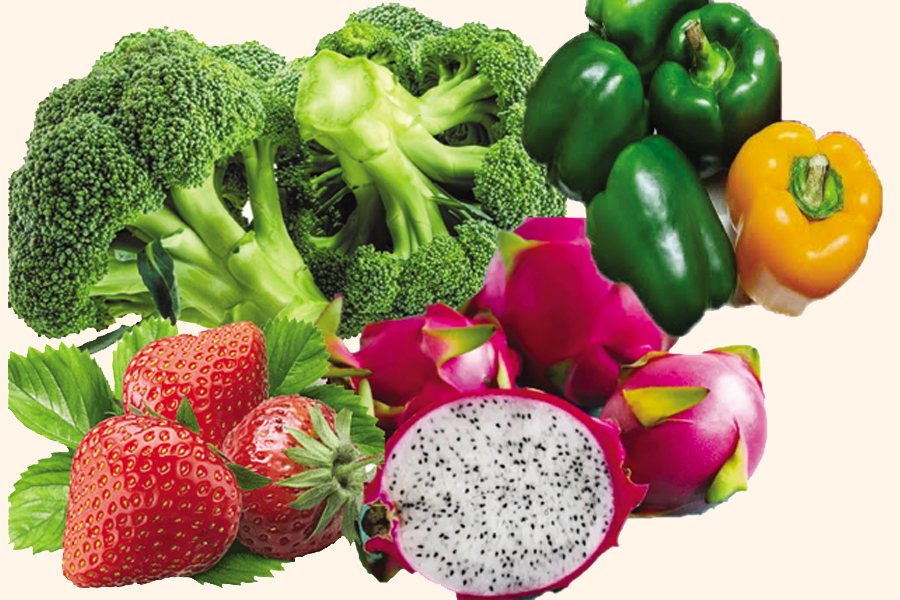
Around that period, the country could not feed its population well but now with declining farmlands, the country boasts near self-sufficiency in staples for a population of 180 million. Production of vegetables, including traditional potato on the one hand and exotic varieties like broccoli, capsicum, Chinese cabbage, beetroot, baby corn, sweet corn etc; has only demonstrated the enterprising spirit of the country's farmers. To their credit, they have success stories in commercial production of dragon fruit, straw berry, orange, sweet orange and sweet lime. Even a few have successfully cultivated cashew nuts in the hilly districts. However, the cultivation of tea on plain lands in the country's north is a unique achievement. In this connection, let it be noted that introduction of as exotic a flower as tulip along many others only shows how enterprising farmers in this country are and land can still be used for purposes other than cultivation of paddy.
Similarly, in freshwater fish production, the country proudly holds the second position globally after India. With the water bodies shrinking, this is an enviable feat. Although hilsha production has experienced a significant decline in recent times, it still ranks first in the world. The highest credit goes to aquaculturists or conservation biologists for bringing back a number of indigenous fish species from the brink of extinction and promoting cultivation among farmers.
All this is a proof that there has been a paradigm shift in the attitude of farmers to try their hands at cultivation of cash crops as well as those that contribute to dietary richness and varieties. But the agriculture extension officers (AEO) who work at the field level, notwithstanding their appreciable promotion work, have failed to match their promotional task with the guidance for application of chemical fertilisers and pesticides. This awareness lapse on the part of both AEOs and farmers has been responsible for large-scale application of fertilisers and pesticides, at times without respecting the required gap between pesticide use and harvest.
So food can get contaminated by chemical residues from two distinct sources. Agriculture largely dependent on chemical fertilisers and often indiscriminate use of those can be the source of contamination of lands not using those by way of rain water, flooding and even air. This is happening right now. This is indirect poisoning of foods. But the other type is deliberately done in order to reap benefits. Discerning people have to apply their best of judgment before purchasing anything from the market. They want to rest assured that the white rice they purchase is not polished from coarse varieties and vegetables are free from heavy metals like lead, chromium, cadmium, arsenic, nickel, copper, zinc, mercury and iron.
To extend shelf life of fruits, vegetables and other perishable foods, formalin is used. But the formaldehyde solution is extremely hazardous to human health. On the other hand, artificial ripening of fruits like papaya, banana and mango is a common practice. Use of ethylene gas and ethephon for ripening these fruits are legally approved because those are considered more or less safe. But calcium carbide and ethylene glycol are harmful for internal organs like kidney. Dishonest traders in this part of the world feel no qualms about putting public life at risk. Worldwide 600 million people die of different diseases linked to adulterated or chemically contaminated foods each year. In Bangladesh, 30 million children suffer from food-borne illnesses annually.
Evidently, food hygiene is not a priority here. Not many people are even aware of food safety. Vegetables are usually overcooked or nutritious value of fish and meat are spoiled by heavy mixture of oil and spices as well as preservation in fridges for serving a few days or weeks later when those are heated or cooked anew. This may cause food poisoning.
However, it is the dishonest traders who try their hands at adulteration and contamination of foods with the ulterior motive of making undue profit. That they too are paid in the same coin when they buy other items they do not deal in is none of their concern. Actually, the quality of life has not allowed the natural development of a culture of safe foods where any consumable item is thought to be sacrosanct. Instead they resort to malpractices and illegal food adulteration and contamination without compunction.
So, the present drive against adulteration of foods will prove futile until the majority of citizens become aware of the benefit of maintaining purity of consumable items. Instead of indiscriminately applying chemical fertilisers and pesticides, there should be room for applying organic fertilisers. Farmers unknowingly apply chemical fertilisers and insecticides more than the recommended limit. If they are persuasively briefed of the harms those cause to human body, they are likely to go for natural alternatives as much as they can. The agriculture extension officers can be given the responsibility of developing close relations with farmers and help navigate the 'more the better' mental bias for minimising chemical fertilisers and pesticides. It is challenging but to save the posterity from this self-annihilating practice, there is hardly any other option.
nilratanhalder2000@yahoo.com