


A recent analysis by economist Dr Zahid Hussain in an English Daily (TBS, January 31, 2026) offers a useful perspective on Bangladesh's inflation dynamics. He argues that food inflation largely operates independently of monetary policy, yet contributes to persistence in headline inflation. He further suggests that monetary policy in Bangladesh works mainly through the exchange rate rather than domestic demand: credit expansion raises import demand, weakens the taka, and pushes up non-food prices. This reasoning is sensible as far as it goes.


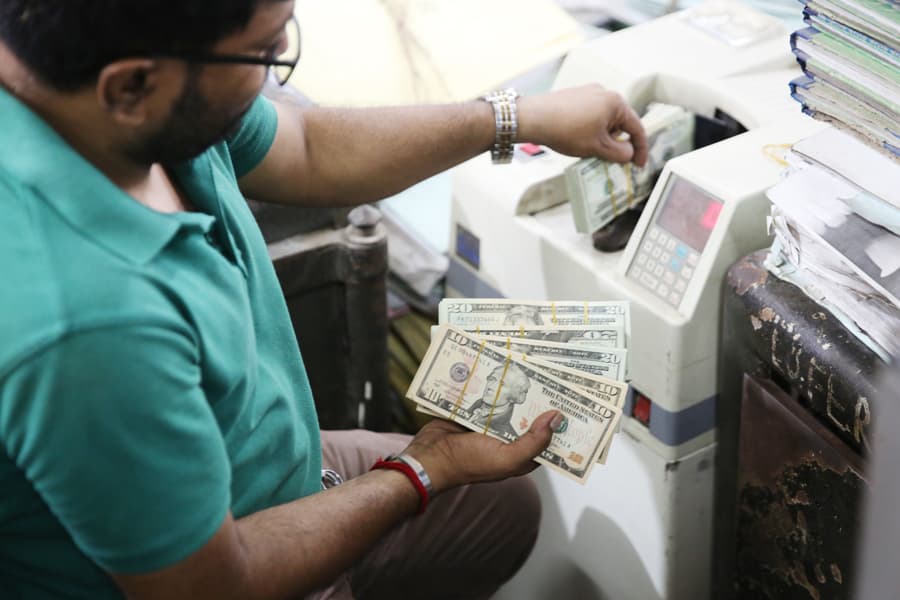
But a question remains. The taka lost about 40 per cent of its value against the greenback between mid-2022 and late 2024-falling from roughly per US dollar at Tk 86 to Tk 122-and has since stabilised. If tight policy works by holding the exchange rate steady, and if the effects of past depreciation should have passed through by now, why is inflation still so persistent? It peaked at around 12 per cent but has only slowly eased to about 8.5 per cent. On 9 February 2026, Bangladesh Bank held the policy rate at 10 per cent for the fourth consecutive time, acknowledging that inflation remains above target. Either pass-through is much slower than standard models suggest, or something else is keeping prices elevated that the exchange-rate story alone cannot capture.
Research by the International Monetary Fund (IMF) and others shows that monetary transmission in developing economies depends heavily on central bank credibility. Bangladesh Bank has faced such challenges in recent years. Under the previous regime, interest rate caps distorted market signals, multiple exchange rates created confusion, and the central bank's independence was compromised. The current governor has moved to address some of these issues, but credibility takes time to rebuild. When businesses and households doubt that tight policy will last, they have less reason to change how they set prices. The scholarly literature on inflation expectations confirms this.
But even if credibility improves, a puzzle remains. Bangladesh Bank's own quarterly reports acknowledge that wage growth has consistently lagged inflation, meaning real incomes have been falling. If purchasing power is declining, how can demand-pull pressure sustain elevated prices? The textbook story says inflation should ease when consumers cannot afford higher prices. Yet food prices, which take up the largest share of household budgets, have stayed elevated even as real wages have fallen. Something other than excess demand seems to be at work.
One possibility is that inflation has become substantially detached from aggregate demand conditions-consistent with the emphasis on supply-side and structural factors. But this creates a tension in the policy framework. If food inflation is driven by market structure and supply chain dynamics rather than monetary conditions, then holding the policy rate at 10 per cent imposes real costs on credit-dependent sectors without doing much to moderate food prices. It is not obvious that the non-food channel alone justifies these costs.
The banking crisis makes matters worse. Non-performing loans (NPLs) have reached 36 per cent of total outstanding credit, the highest level in 25 years. Private sector credit growth has fallen to around 6 per cent, something not seen in decades. Many banks are effectively insolvent and cannot extend new loans regardless of the policy rate. Normally, when the central bank raises rates, borrowing becomes expensive and spending slows. But that logic breaks down when banks cannot lend in the first place. Credit is not flowing because banks are crippled, not because borrowers are put off by high interest rates.
This creates a curious situation. The policy rate stays at ten percent to combat inflation, yet it is the government, not the private sector, that is borrowing. Public sector credit is growing at over twenty percent compared with six percent for the private sector. And when Bangladesh Bank lends directly to the government, it pumps new money into the economy, potentially fueling the very inflation that tight policy is meant to control.
There is also an asymmetry in how prices respond to the exchange rate: when the taka weakens, prices rise quickly, but when it stabilizes, prices do not fall back as fast. This means households will keep feeling the pinch of high living costs even as measured inflation declines. Research from the Bank for International Settlements (BIS) finds that what people perceive as inflation tends to run ahead of official figures during such episodes, and this gap closes only slowly. In Bangladesh, where inflation has exceeded nine percent for over two years, even successful disinflation may leave people feeling that prices remain too high.
The recommendation to improve trade finance for essential food imports makes sense but goes only so far. Even if opening letters of credit were easier, private importers have been reluctant to bring in rice because it costs more to import than to buy domestically-once shipping, currency costs, and fees are factored in. Despite approval for over a million metric tons of rice imports, actual imports have been a small fraction of this. Domestic prices are high by historical standards, but not high enough to make importing worthwhile. This complicates the usual prescription that opening up imports will bring prices down. When imported rice costs more than local rice, liberalisation alone cannot provide the expected competitive pressure.
A related timing puzzle deserves attention. What we call persistent food inflation has occurred alongside several years of good harvests. Bangladesh has produced record rice crops recently, yet rice prices have continued to rise. Basic supply-and-demand logic offers no answer: why didn't record harvests bring prices down? The explanation points to market structure-powerful middlemen who can set prices, and weak competition-well documented in Bangladesh Bank's own studies of food markets. But once we accept this diagnosis, the policy question becomes uncomfortable. If monetary policy cannot fix food inflation, and if structural reforms require political will and institutional capacity that may be in short supply, what can monetary policy actually do?
This does not mean monetary policy is irrelevant, or that cutting interest rates would be wise. The exchange rate still matters, and loosening policy too quickly could weaken the currency and push prices up again. At the same time, the limits of tight policy need to be acknowledged. Higher interest rates carry real costs, and the channels through which they are supposed to work are badly impaired.
What is needed is better coordination across policies to keep inflation under control. Fiscal policy should rely less on borrowing from the banking system so that tight monetary policy is not quietly undone. Trade policy should make imports easier in practice, including by fixing exchange-rate margins that discourage them, so domestic prices face real competition. Banking reforms should focus on strengthening sound banks and closing those that no longer work, so credit policy can actually take effect. Competition policy should reduce rent-seeking in food markets, where prices often stay high because competition is too weak to push them down. None of these steps would work on their own, but together they would amount to a clear and consistent approach, rather than policies moving at cross-purposes.
The author is an economist and independent researcher.
syed.basher@gmail.com