

Published :
Updated :
 For all latest news, follow The Financial Express Google News channel.
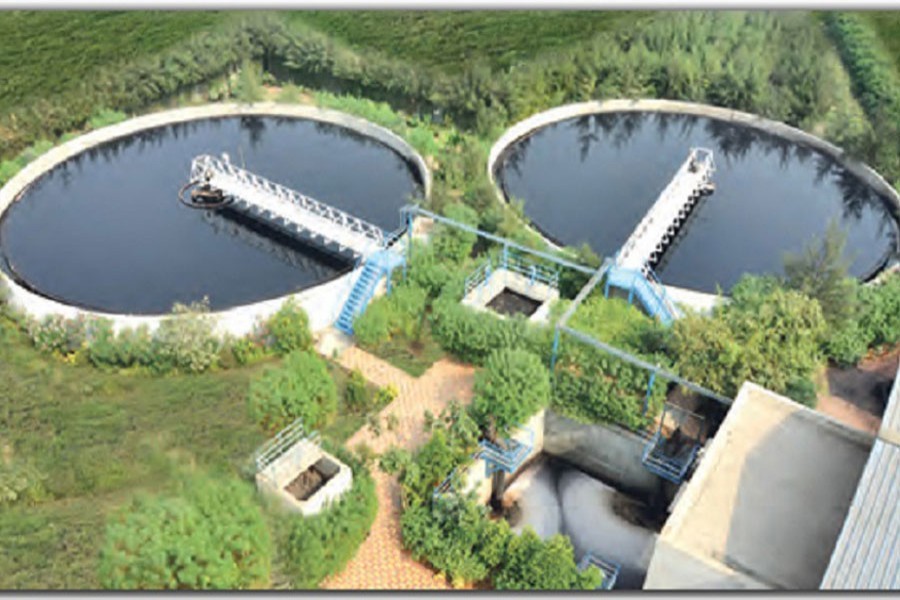
The saga of the central effluent treatment plant (CETP) at the Hemayetpur in Savar shows no sign of coming to a happy end. If one looks back at it, the tug of war between the government and the industry spanned over a decade when policymakers were trying to get the tanners to move out of Hazaribagh area in Dhaka to the tannery estate. The tannery estate took a long time to develop and the critical part of the estate that revolved around the setting up of a CETP, an equally long time.
Having now moved their tanneries to Dhaka Tannery Industrial Estate, those companies that do not have their own ETPs are in a fix, because the CETP apparently hasn't worked properly since its inauguration in 2021. As stated in a recent report published in this newspaper "the absence of properly functional CETP deprives the country of having the certification from the Leather Working Group (LWG) which is mandatory for exporting leather products to top global brands". It is not as though this was not known either to industry or the government, both of which have wasted decades wrangling over whether to move to an industrial estate, about which party should pay / share cost of setting up a CETP, so on so forth. At the end of the day, a CETP has been set up, which according to industry insiders, hasn't functioned properly from Day 1. While the blame game continues on both sides, let's look at what is being lost in the process. Policymakers are eyeing an annual export market worth US$10 billion for leather and leather goods over the next five years. Precisely how this will be achieved without a working CETP is anyone's guess.
Having failed to get it right the first-time round, the ministry concerned finds itself on the back foot as questions are being raised. Embarrassing questions about how substantial amounts of public money was spent to commission a low-quality CETP that was supposed to treat 30,000 to 40,000 cubic meters of waste daily, but ended up being good for only about 25,000 cubic meters. Obviously, there was problem in planning and execution of the project. But there is hardly any point in crying over spilled milk since, public funds have been spent and years wasted. It is time to rectify the project and get a move on so that the leather estate may start treating waste, which is now largely being discharged (untreated) into the neighbouring water system causing ecological problems.
The tanners' association has its doubts that the problems can be fixed in time to catch the export boom. Who can blame the body? After all the first CETP facility's construction started in 2010 with a financial outlay of Tk 5.45 billion which took 11 years to construct, and the original cost of the project shot up by nearly 100 per cent to Tk10.15 billion. The project changed hands and the next company that was supposed to finish in the next two years somehow, miraculously, managed to obtain seven extensions and handed over a completed CETP in 2021 (10 years after original construction started) and one that functions at a sub-par level. Now the question is why public infrastructure that are being constructed by companies which have, for whatever reason, failed to deliver the first time are given repeated extensions? These extensions drive up costs and are basically a breach of contract, and yet we see that this has become a modus operandi for most public infrastructure projects in the country. One can only hope that the authorities have learnt their lesson and will get the CETP up and running as soon as possible.
mansur.thefinancialexpress@gmail.com