

Published :
Updated :
 For all latest news, follow The Financial Express Google News channel.
When we scroll through social media and laugh at a 'funny' video, do we ever pause to wonder: whose life is being shattered for our momentary amusement?
We define our progress through technological achievements. But is it how it should be? Should not our advancement lie in knowledge, values, and empathy?
Today, we see others mocked for entertainment and monetary gain. What we now call 'bullying' has become normalised.
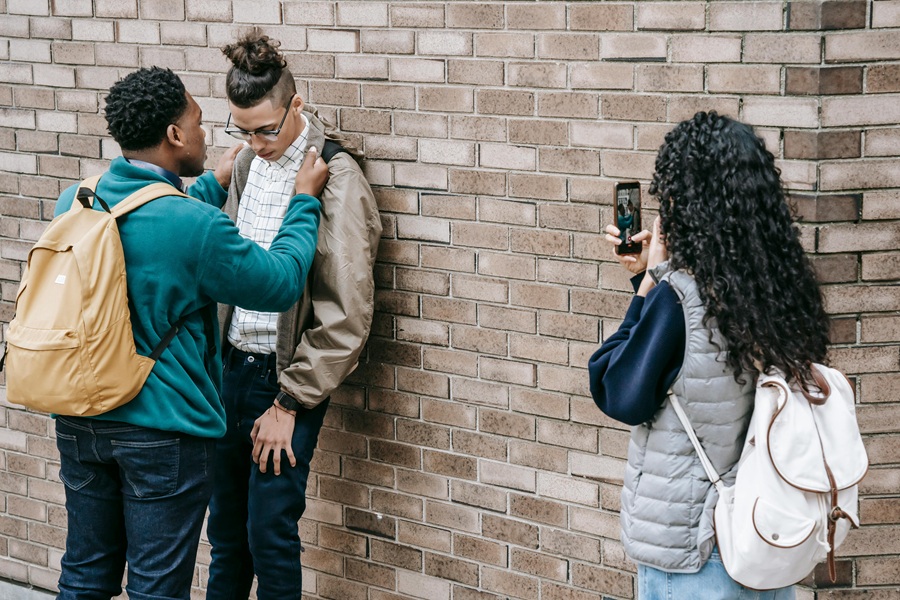
Sometimes someone's public embarrassment becomes a topic of discussion among others. And the public starts consuming it as 'funny content,' often disseminating a toxic message as if it is acceptable to degrade another human being for a laugh.
Imagine someone slips in a muddy puddle, or a person with a disability behaves their own way in public. We instinctively reach for our phones to record the incident rather than help.
Then the video goes viral, gets millions of laughs and shares. But what does this laughter cost us? It numbs our humanity, our natural urge to help someone in distress.
This apathy is rotting our core. Many families still don't recognise bullying as harmful, so students endure relentless emotional abuse in schools. Some teachers even body-shame students, crushing their confidence and leaving a lifelong mark on their insecurity. For some, these wounds become so unbearable that they lead to tragic ends.
The lack of proper education at home and in school is shaping a generation so detached that even the dead are not spared ridicule. The tragic passing of young content creator Karina Kaiser, who brought joy to many, is a heartbreaking example. Our society failed to grant her the basic respect she deserved—even after her death.
The obsession with chasing viral fame is now a public emergency. People will do anything for views, animals are tortured on camera, women are harassed in the streets, and deeply personal moments are commercialised in the name of roasting.
Just recently, a video circulated of a man brutally beating his wife in broad daylight, his children wailing. Bystanders watched or filmed, treating the horror as a show.
What's worse is the deluge of 'haha' reactions and comments justifying such brutality. No matter the excuse, how can anyone justify publicly humiliating or assaulting another human being?
This epidemic of cruelty proves that no one's dignity or safety is guaranteed anymore. Anyone can be targeted, while society tries to legitimise this vulgarity.
Do we realise the darkness we're descending into? Justice must be swift to prove we're a civilised society that protects fundamental rights. Video creators and publishers who treat public spaces as lawless zones must learn that harassment—online or off—is a punishable crime.
Those with a conscience must speak out and lead; Otherwise, our silence will simply prove that we are silent killers.
Social media algorithms only fuel this fire. Instead of promoting constructive content, platforms push material that incites outrage and controversy—because outrage drives engagement, which in turn drives profit. In this cycle, content creators cross every ethical line to stay relevant. Psychologists call it "moral disengagement." Behind the screen, people forget that their target is a real, feeling human being.
To halt this digital violence, government intervention is essential. Bangladesh should introduce a 'Digital Violence Control Act'—not to censor or stifle free speech, but to enforce accountability for cybercrimes. Countries like South Korea and Germany fine platforms that fail to remove harmful content quickly. We can adopt these models to create a responsible digital ecosystem.
Every viral bullying video spreads a psychological virus far more damaging than the clip itself. Just one such video can destroy someone's reputation, career, and mental health within hours.
The time has come to overhaul our digital habits: we must cultivate online spaces that promote uplifting stories and thoughtful content. If we fail to take this responsibility, our society will completely sink into darkness, driven by the vulgarity and chaos of cheap bloggers and sensationalists like Hero Alom, Cream Appa, etc.
This transformation must begin at home and in our classrooms. Digital literacy and ethics should be mandatory in schools, teaching children early what is acceptable online and what is not.
Ultimately, the world is made beautiful by the light of the human heart—not the glow of a smartphone screen. In this blind race for viral fame, don't sacrifice your conscience.
The video you make or share might get millions of views, but at the end of the day, can you meet your own eyes in the mirror without shame?