

Intellectual dishonesty distorts history
Bangladesh's history must not be confined to a particular political ideology-based framework
Published :
Updated :
 For all latest news, follow The Financial Express Google News channel.
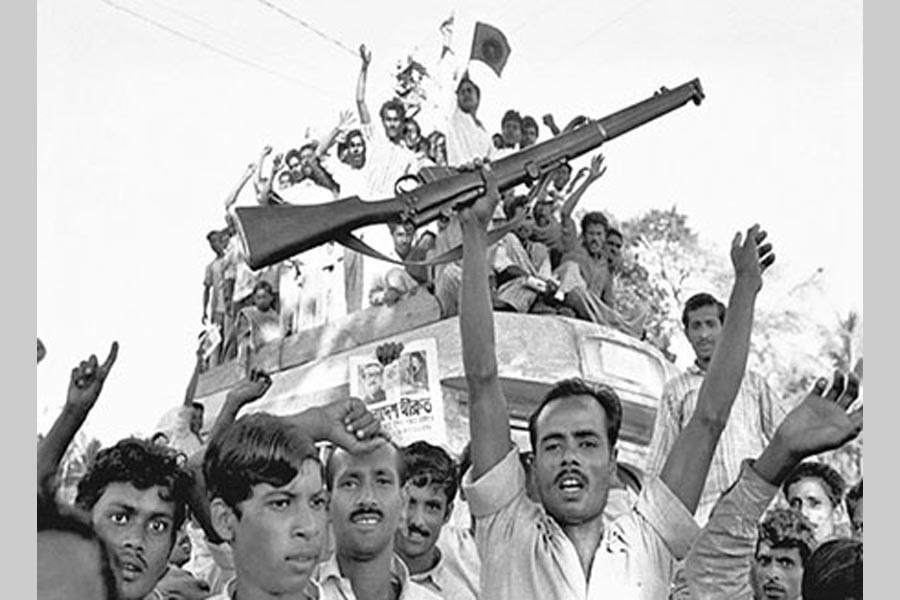
December is a time for the Bangladeshis to reflect on the sacrifices and achievements made during the war of liberation. Fifty-five years ago, Bangladesh was first recognised as an independent country. Bhutan recognised Bangladesh on December 6, 1971, and India did the same the next day. Two days before, India and Bangladesh signed a joint-forces agreement, allowing the Indian Army to join the fight against the Pakistani Army. As the Muktibahini, Bangladesh's freedom fighters, had already cornered the Pakistani forces, this joint operation brought the war to its end. The Pakistani forces surrendered in less than two weeks, and Bangladesh won its nine-month war of independence on December 16, 1971. The war had cost three million lives, seen the ultimate dishonour of two hundred thousand women, and left widespread destruction across the land.
December is also important because of Martyred Intellectuals Day, or Buddhijibi Dibosh, observed every year on December 14. This day honours the intellectuals who were attacked, abducted, and killed in 1971 by the Pakistani Army and their local collaborators. The last attack happened just two days before the victory, in a desperate attempt to eliminate the country's leading thinkers and scholars.
It is disappointing that, even after more than five decades, the sacrifices of the martyrs are not fully recognised by a section of today's intellectuals. Many are instead misleading people by distorting history to support their own political views.
Since independence, some intellectuals and historians, who are keen supporters of Awami League, along with some left-leaning scholars, have tried to present Bangladesh's history as if nothing important happened before 1947. This trend grew stronger during the Hasina regime during 2009-2024, when efforts were made to promote a one-sided story of the liberation war, claiming to fix earlier distortions.
In this process, the Hasina regime, ousted on August 5 last year in the face of student-led mass uprising, cornered the contribution of the millions of people in the nine-month war or their decades of fight against oppression. The so-called progressive and self-claimed pro-liberation intellectuals systematically distorted the historical records by rewriting the history of Bangladesh to develop a Mujib-centric narrative. The core of the narrative is to worship Bangabandhu Sheikh Mujibur Rahman as the sole thinker, planner, and leader of the struggle for freedom, the dreamer, and the founder of Bangladesh. The narrative has also made the Awami League the only authority to say the final words on the liberation war.
One main feature of the Mujib-focused version of history is that it downplays the role of Bengali Muslims in the anti-British movement and the fight for freedom. To put Mujib above everyone, these intellectuals also avoid mentioning his active part in the Pakistan movement as a vivid follower of Hussain Shaheed Suhrawardy. The stooges of Hasina also attempted to rewrite the country's history in line with the Hindutva setting, where Muslims are viewed as 'outsiders' and 'invaders.' The Hindutva ideology labels the seven centuries of Muslim rule in the Indian sub-continent as a 'dark episode' in history. So its followers in Modi-led India now find it right to erase, remove, distort and destroy all types of symbols, landmarks, and records linked with Muslim rulers.
These intellectuals shamelessly helped the Hasina regime to compel everyone to accept the one-sided narrative and disallow any question. Thus, a distorted template of factors, causes and events of the war of liberation was developed.
On the other hand, especially from 1975 to 1990, some intellectuals who opposed the Awami League also distorted the history of 1971. They misrepresented events, questioned the roles and intentions of key leaders using false information, and downplayed the brutality of the Pakistani Army during the war. Some even claimed the liberation war was an Indian plot to break up Pakistan and weaken Muslim unity in South Asia. All these dangerous and toxic pro-Pakistani views still continue confusing younger generations and undermining the spirit of independence.
Nevertheless, the intellectuals' dishonesty has also been gradually exposed, and many are now challenging such biased and distorted narratives. They are also arguing that Bangladesh's history must not be confined to a particular political ideology-based framework. Instead, it has to be reread and re-examined to remove the distortion, and to get a big picture.
asjadulk@gmail.com