

Is the joy of celebration meant to end in sacrifice?
When roads turn into processions of mourning
Published :
Updated :
 For all latest news, follow The Financial Express Google News channel.
Eid is meant to be a homecoming—a return to one’s roots, a moment of happiness in the presence of loved ones. Yet, tragically, over the past few years in Bangladesh, the words “Eid” and “accident” seem to run in parallel. Just as we prepare to fill our homes with the sweet aroma of semai and payesh, somewhere on a highway, the sky grows heavy with the cries of grieving families. The colourful lights of celebration fade, and the black asphalt turns red with blood. Is this bloodshed merely fate, or is it a grim testament to our mismanagement and negligence?
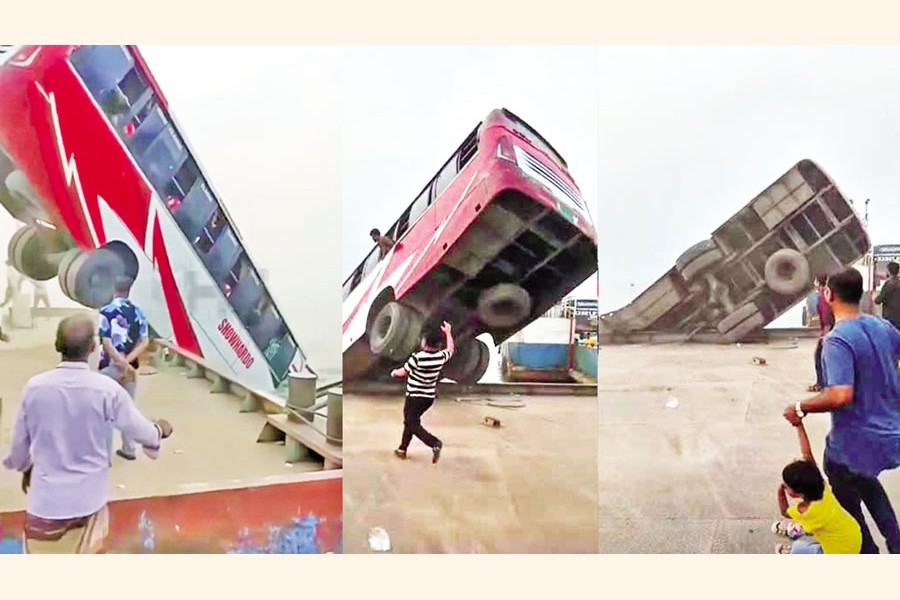
Recent statistics send a chilling message down our spines. According to the Road Safety Foundation, between March 17 and March 26, 2026, within just 10 days, 274 people lost their lives in 342 road accidents across the country. That means, on average, more than 27 people returned home as lifeless bodies every single day. During the same period last year, the death toll was 249. Instead of shrinking, this procession of death continues to grow longer each year. These 274 individuals are not just numbers; they were someone’s father, someone’s beloved child, someone’s sole breadwinner. Several accidents during this Eid journey have shaken the conscience of the nation. The bus-train collision in Cumilla on the night of March 21 still sends shivers down the spine—12 lives were crushed under metal in an instant. Before the shock could subside, on March 25, a bus plunged into the river at Daulatdia ferry terminal in Rajbari, claiming 26 lives.
Are these merely “accidents”? Or are they structural killings? When a bus can easily fall into a river from a ferry terminal, it exposes the fragility of our safety systems. According to BRTA data, between March 17 and 23, 100 people died in 92 accidents. However, non-governmental organisations report numbers more than double that figure. This stark discrepancy highlights the weakness of our monitoring systems. Government agencies often downplay accident statistics to avoid accountability, but the ground reality reveals that highways have become death traps. Research from the Police Headquarters’ Research, Planning and Innovation Division indicates that nearly 42% of accidents are caused by reckless speeding. This obsession with speed is not just an individual driver’s issue; it reflects a deeply flawed transport culture. In the race to increase trips, drivers often operate vehicles for 18–20 hours continuously, inevitably leading to fatigue. And it is the passengers who pay the ultimate price for that exhaustion.
There is no effective database indicating how many vehicles on Bangladesh’s roads are truly roadworthy. During Eid, when passenger demand surges, unfit vehicles are hastily repainted and put back on the roads. Brake failures, tyre bursts, or steering malfunctions are not random occurrences; they are the results of systemic neglect.
This problem is compounded by the widespread presence of unlicensed drivers. A large number of drivers lack valid licences, and even among those who have them, many lack proper training. Corruption within the BRTA runs so deep that unqualified individuals can obtain heavy vehicle licences through bribery. When such unskilled hands control the steering wheels that determine hundreds of lives, tragedy becomes inevitable. Despite spending billions on highway construction, very little attention is given to road engineering. Dangerous curves, faulty intersections, and the absence of separate lanes for slow-moving vehicles (such as Nasimon, Karimon, and battery-powered rickshaws) significantly increase accident risks. Markets along highways and indiscriminate U-turns disrupt traffic flow, causing sudden braking and chain-reaction collisions. While developed countries prioritise safety in road design, our focus remains on superficial infrastructure aesthetics.
Another overlooked yet critical factor during Eid is driver fatigue. Experts suggest that a driver should not remain behind the wheel for more than five hours continuously. However, during peak travel seasons, drivers often operate for 18–24 hours without rest due to pressure from owners and the lure of extra income. Studies show that prolonged driving can lead to a mental state known as “highway hypnosis,” where the driver’s eyes remain open, but the brain effectively falls asleep. Many highway accidents occur late at night or early in the morning due to this phenomenon. While developed countries enforce rest periods through digital tachographs or logbooks, Bangladesh lacks strict regulations and monitoring in this regard.
Research by BUET’s Accident Research Institute indicates that the coexistence of slow-moving three-wheelers and high-speed buses increases accident risks by nearly 60%. Despite government bans, these illegal vehicles continue to operate under political patronage. When a fast-moving bus suddenly tries to avoid a slow vehicle, catastrophic collisions often occur. The failure to restrict highways exclusively to high-speed vehicles is a major flaw in our transport system. Another major reason behind the rising death toll is the delay in rescue operations. In medical science, the first hour after an accident is known as the “golden hour.” Proper treatment within this time can reduce the risk of death by half. Unfortunately, in Bangladesh, local people often act as first responders without proper training or equipment. By the time fire service teams or highway police arrive, many lives are already lost. The lack of trauma centres along highways further worsens the situation.
The integration of drone technology, GPS tracking, and air ambulance services is no longer a luxury; it is a necessity. The enactment of the new Road Transport Act once raised hopes. But where is its implementation? In most cases, drivers and owners escape accountability through political influence. The dominance of politically affiliated transport groups often obstructs proper investigation and justice. When drivers know they can secure bail quickly even after causing deaths, there is little deterrence. Without ending this culture of impunity, the dream of safe roads will remain an illusion.
So, what must be done?
We must move beyond temporary solutions. Digital monitoring systems with speed cameras and CCTV must be installed across highways, with automatic penalties for violations. The BRTA must be reformed and freed from corruption, ensuring transparency in licensing and fitness certification. Modern driver training centres must be established in every district, emphasising both technical skills and traffic ethics.
Vehicle owners must be held equally accountable, alongside drivers, for operating unfit vehicles.
Ultimately, road accidents are not isolated incidents; they are manifestations of a systemic crisis. Blaming drivers alone will not stop this procession of death. The state must declare road safety a national crisis.
We must build a modern road system based on four pillars: sound engineering, regulated driver working hours, removal of unfit vehicles, and strict enforcement of the law. How long will we continue to celebrate Eid over the bodies of our loved ones? The state must realise that no development statistic can justify the loss of human life. Modern highways and flyovers will only be meaningful when people can leave home safely and return unharmed. Let the cries of those who lost loved ones this Eid reach the ears of policymakers. It is time to transform our roads from corridors of death into safe bridges of connection. Let the bloodshed not be in vain. Let the joy of celebration never again be overshadowed by the grief of loss.
Mir Abdul Alim is a journalist, social researcher, and Secretary General of the Columnist Forum of Bangladesh.