


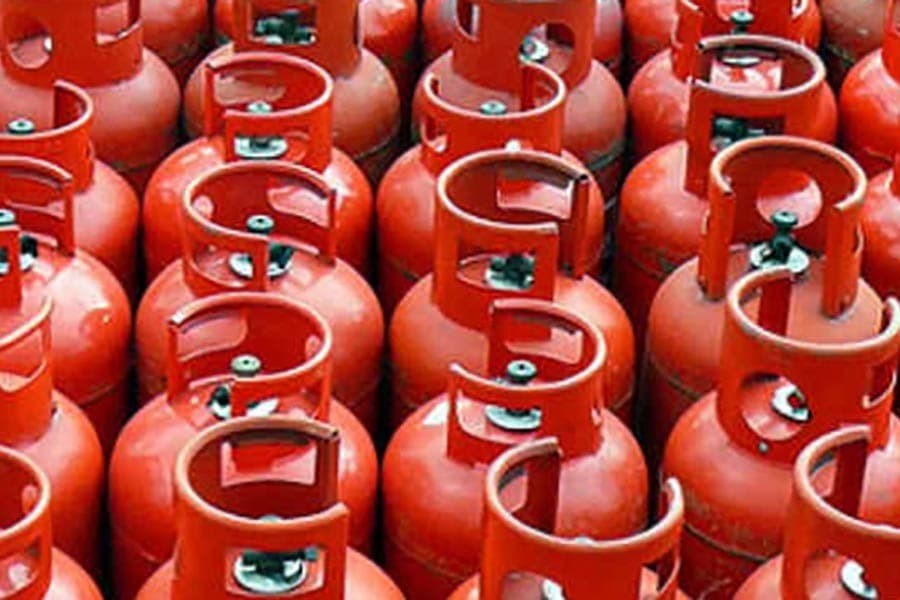
Liquefied petroleum gas (LPG) is no longer a luxury; it has become an essential cooking fuel for millions of households across the country. As domestic natural gas reserves dwindle, authorities have for years encouraged domestic use of LPG as an alternative. New residential gas connection has remained suspended for years, and is unlikely to be resumed in the foreseeable future. Even many households that still have pipeline connections are forced to keep LPG cylinders on standby, as stoves connected to the grid remain dry for the better part of the day. As a result, cylinder gas has become a fact of daily life from rural areas to major cities. However, the sudden volatility in the LPG market over the past two weeks has exposed how people have been made dependent on a commodity over which the government exercises almost no effective control.


The country is almost entirely dependent on imports to meet the growing demand for cylinder gas. At the same time, the market is overwhelmingly dominated by private companies. Unlike pipeline gas, there is no state buffer stock. As a result, even when the government wants to intervene, its ability to suddenly increase supply and bring prices under control is limited.
The state-run Bangladesh Petroleum Corporation (BPC) produces and sells LPG at a much lower price than private companies. However, BPC's share of the LPG market is so negligible that consumers rarely find its cylinders available, forcing them to rely on the more expensive products of private operators.
The Bangladesh Energy Regulatory Commission (BERC) fixes LPG cylinder prices every month in line with international rates. Yet private suppliers and distributors have routinely sold LPG at several hundred taka above the government-set prices. The problem came to a head in recent weeks when the price of a 12kg cylinder rose to between Tk 1,700 and Tk 2,500, even as the official price was fixed at Tk 1,306.
Prices were raised on the pretext of lower imports, even though official data show steady import volumes and adequate stock levels. The Energy affairs Advisor of the government has himself acknowledged that prices were increased by creating an artificial shortage.
When the government began taking action, private suppliers stopped selling LPG from Thursday. Although the strike was withdrawn, at both wholesale and retail levels, suppliers are still selling 12kg cylinders at Tk 350 to Tk 900 above the government-fixed rate. Many wonder, what is the point of fixing the price if the government cannot enforce it?
Bangladesh is all too familiar with this cycle of price manipulation where importers blame wholesalers and the wholesalers blame the retailers. In this blame-shifting game, it is ordinary people who bear the cost. The social impact of the LPG crisis is quiet but far-reaching. Low-income families are cutting back on food consumption. Middle-class households are cutting back on their spending for their children's education or healthcare to cope with higher cooking costs. Small food businesses who are struggling to survive and raising prices are putting further pressure on consumers. In this way, the LPG crisis gradually seeps into the wider economy and fuels inflation.
Beyond pricing, serious concerns have also been raised about product quality and public safety. To maximise profits, some companies are allegedly marketing substandard cylinders, a malpractice believed to contribute to frequent cylinder blasts.
In a sector so inextricably linked to day-to-day life, the government must enforce stricter monitoring over supply chains, pricing structures and technical specifications. At the same, the state should strengthen the BPC and expand its market share in the LPG market. This is the only way to prevent private sector dominance from holding consumers hostage over such an essential commodity.