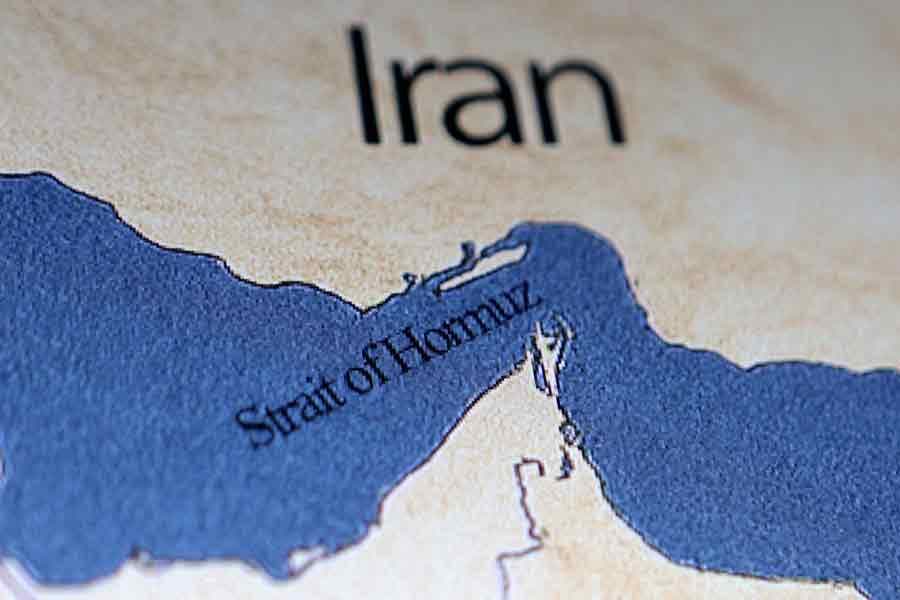
Nobel Laureate Paul Krugman has contended that the Iran war could be the "straw that breaks the camel's back" for a delicate U.S. economy, resulting in a "fresh level of massive uncertainty” due to current stresses. Contrary to what Nobel Laureate Joseph Stiglitz has cautioned, the US faces a risk of stagflation due to the economic consequences of the conflict. Furthermore, another Nobel prize winner, Simon Johnson, emphasised the harshness of the oil supply disruption, noting that 20 million barrels of oil a day go through the Strait of Hormuz.
In comparison, a small country like Bangladesh has already started facing problems. The onset of the Iran conflict in early 2026 has precipitated a pronounced macroeconomic shock across the global economy, driven primarily by energy price volatility, strategic contest ability over the Strait of Hormuz, and an escalating shift toward a protracted war of attrition. This external upheaval could not have come at a more fragile time for many emerging economies. Consequently, for an energy-import-dependent nation like Bangladesh—coupled with its large migrant workforce concentrated in the Middle East—these external disruptions have translated into severe domestic vulnerabilities that demand immediate and coordinated policy responses. The government is now under mounting pressure to shield the broader population from the cascading effects of this geopolitical crisis. Nature of the Supply-Side Shock to understand the gravity of the situation, one must first examine the nature of the economic shock. This geopolitical confrontation has generated a difficult stagflationary mix for global markets, as oil-driven cost-push inflation rises concurrently with slowing aggregate demand, particularly in energy-importing regions such as Europe and emerging Asia.
In other words, Bangladesh is facing the worst of both worlds: rising prices and decelerating growth. In tandem, the war has forced maritime rerouting and spiked freight costs, with bunker fuel prices elevating container shipping rates significantly. For a country whose export competitiveness rests on narrow logistics margins, this is a severe blow. Behind the scenes, major powers including China, Russia, and India are quietly formulating strategic hedge positions, suggesting that the battle is increasingly viewed as a persistent structural shock rather than a temporary price spike. For Bangladesh, the most immediate transmission mechanism is the external energy bill. With annual energy imports near $12 billion, analysts estimate that every $10 increase in global oil prices adds roughly $900 million to import costs. Given that oil prices have surged to $121 per barrel—up from approximately $72 a year ago—the macroeconomic pressure is acute. The country’s current account, already under strain, is now bleeding further.
Impact on Bangladesh’s Macroeconomic Stability
This external shock poses severe risks to Bangladesh’s key macroeconomic aggregates. Economists project a potential GDP growth reduction of 1.2 to 3 percentage points if the conflict persists through the fiscal year. Simultaneously, soaring LNG and fuel costs are feeding directly into heightened consumer price inflation via pass-through effects. The Bangladesh bank’s monetary policy target, already missed last quarter, now appears increasingly unattainable. Another major concern is the strain on foreign exchange reserves from widening current account deficits. As import bills balloon, the central bank may be forced to intervene more heavily in the foreign exchange market, drawing down reserves at an accelerated pace. Moreover, remittance flows—a critical buffer for the balance of payments—remain vulnerable should Middle Eastern host economies contract or impose new levies on foreign workers. Bangladesh’s export competitiveness, especially in the ready-made garment sector, is also eroding due to elevated logistics and insurance premiums. International shipping lines have added a geopolitical risk surcharge for cargo moving through the Arabian Sea, further squeezing profit margins of exporters. Indeed, the pressure has already manifested visibly on the ground. Fuel rationing is now in effect across several districts. Diesel sales restrictions have been imposed on non-essential transport. Gas conservation measures have led to load-shedding in industries. In a drastic move, four out of five state-run fertiliser plants have been shut down to protect electricity generation for residential areas. Universities have closed early for the semester to save power, and the government has turned to emergency spot-market LNG purchases at sharply higher prices, further eroding the fiscal space.
Social Implications: Beyond the Numbers
While the macroeconomic numbers paint a grim picture, the social implications are even more troubling for ordinary Bangladeshis. Rising energy costs directly translate into higher transportation fares, which then cascade into food prices. Vegetable, fish, and poultry prices have already increased by 15 to 20 per cent in major city markets over the last month alone. Lower-income households, which spend nearly 60 per cent of their income on food and fuel, are being hit hardest. There are emerging reports of reduced meal frequency in rural areas—a classic distress indicator. The shutdown of fertiliser plants also carries a delayed social cost. Farmers now face a shortage of urea ahead of the critical harvest season. If agricultural output falls, the country may be forced into large-scale food imports, further pressuring the reserve and triggering a secondary inflation wave. Additionally, the early closure of universities has disrupted the academic calendar, potentially delaying graduations and creating a bulge in the job market next year. Women and children, often the last to receive household resources, are disproportionately affected as household budgets shrink. Furthermore, the migrant worker community in the Middle East is living in a state of acute anxiety. Many Bangladeshi workers in Iran, Iraq, and the Gulf States face job insecurity as the construction and service sectors slow down. A sudden repatriation of even 10 per cent of the two million workers in the region would unleash a domestic unemployment shock that the economy is ill-prepared to absorb. Remittance inflows, which stood at $22 billion last fiscal year, could decline by up to 20 per cent, destabilising rural economies that depend on this steady income stream.
Government Response to Date
Recognising the severity, the government has moved beyond ad-hoc rationing toward a broader containment strategy. In recent weeks, policymakers have focused on diversification of fuel supply sources, including renewed interest in coal and hydropower imports from neighbouring countries. The government has also successfully negotiated deferred payment arrangements with several oil-producing nations, easing immediate liquidity pressures. Parallel, there has been a visible push for accelerated renewable energy adoption, with new solar parks fast-tracked for approval. Most notably, the government is actively pursuing over $2 billion in external financing from the IMF and World Bank to secure fuel and LNG imports. However, these measures, while necessary, remain insufficient given the uncertainty surrounding the conflict’s duration and intensity.
A piecemeal approach risks being overtaken by events on the ground. Required steps and the role of a high-level macroeconomic coordination committee to address these multifaceted challenges cohesively, the government should establish a dedicated National Macroeconomic Crisis Coordination Committee. This body, comprising the finance minister, some members of parliament from all parties, economists, Bangladesh Bank’s governor, energy secretary, commerce secretary, labour secretary, foreign secretary, journalists, trade representatives, and a social protection adviser, would be empowered to implement integrated policy responses across seven critical areas. First, in terms of monetary policy adjustment, the central bank should preemptively hike policy rates to re-anchor de-anchoring inflation expectations. Given the tight labour market and elevated starting inflation point, delaying rate action would only worsen real interest rate negativity. Second, regarding exchange rate management, the committee would oversee a managed float, allowing gradual exchange rate adjustment while intervening to prevent sharp depreciation and currency overshoot. A sudden crash would spike import costs further. Third, fiscal discipline must be maintained. The government should avoid broad-based energy subsidies, which are fiscally unsustainable and often regressive. Instead, deploy targeted cash transfers to vulnerable households using existing digital payment platforms. This would contain the fiscal deficit while protecting the poor. Fourth, trade and logistics support is essential. The committee can provide temporary trade facilitation measures for garment exports—such as reduced port charges and expedited customs clearance—to counter rising shipping costs. Fifth, energy diversification must be treated as a national security priority. The committee should mandate accelerated investment in domestic gas exploration, regional energy connectivity, and utility-scale renewables to reduce long-term import dependency. Sixth, remittance facilitation requires diplomatic engagement with Middle Eastern host countries to protect worker welfare, alongside the development of lower-cost digital remittance channels.
Finally, reserve management calls for prioritising essential imports and securing contingency external financing from multilateral sources like the IMF, World Bank, and Asian Development Bank to buffer reserve drawdowns. Long-Term Structural Perspective in periods of elevated geopolitical uncertainty, diversification across economic exposures is paramount, as concentration in a single energy source or trade route carries systemic risk. Even if the current conflict proves to be an elongated episodic issue rather than a permanent rupture, diversification remains essential for macroeconomic resilience. The government must use this crisis to accelerate import substitution in energy and reduce the economy’s high energy intensity per unit of GDP. While near-term volatility will likely persist, long-term outcomes remain anchored to fundamentals: productivity growth, inflation credibility, and fiscal discipline. For Bangladesh, the deeper structural problem remains unchanged regardless of whether oil prices temporarily retreat or spike again—macroeconomic stability remains excessively sensitive to external energy and shipping disruptions. Therefore, the government must treat this moment as a catalyst for structural transformation, not merely a transient shock to be weathered. The cost of inaction, measured in lost growth, social distress, and eroded external buffers, is simply too high to bear.
The writer is a Professor at the Department of Economics of the Bangladesh University of Business and Technology. He can be reached at pipulbd@gmail.com.