


As The Financial Express marks its thirty-second year chronicling the economic and social transformation of Bangladesh, it is imperative to focus analytical attention on the foundational pillar of our future progress: the education system. A nation’s true wealth lies in its human capital, and yet, the current structure of secondary education in Bangladesh presents a chaotic and contradictory governance model that actively undermines national development goals and the promise of equitable opportunity for the next generation.
The core of this crisis is MPO (monthly payment order) paradox, a system where the government shoulders the financial burden of the sector without establishing corresponding control over its quality, management, or geographical planning. Unless the state moves decisively towards the nationalisation of its secondary schools, Bangladesh risks failing the United Nations Sustainable Development Goal (SDG) 4.1, which mandates free, equitable, and quality primary and secondary education for all by 2030.
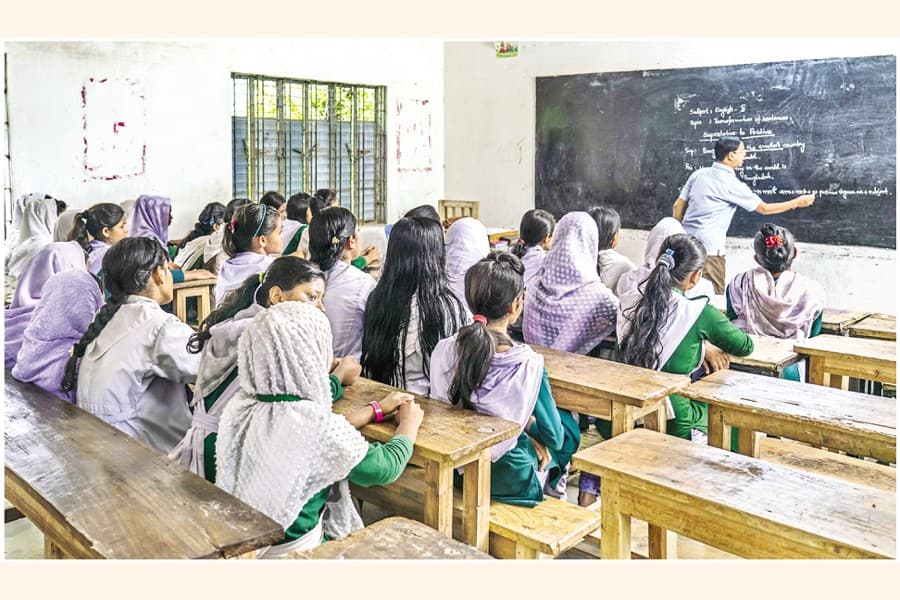
The root of a deep-seated problem of crisis proportion lies in structural anomaly and governance chaos in this vital nation-building arena. The Bangladeshi secondary-education landscape is dominated by an extraordinary structural anomaly evident from an official account. According to BANBEIS 2023 data, out of 20,448 secondary schools, 19,376 are MPO-listed, representing 94.76 per cent of the total. Similarly, 88.87 per cent of all madrasahs (8,229 out of 9,259) are MPO-supported. Whilst a general education stream and a madrasah stream form the bulk of this sector, this staggering reliance means the vast majority of these private institutions are financially supported by the government through the monthly-payment-order system.
 The MPO system is the mechanism by which the government pays the salaries and allowances of teachers and staff in non-government schools and madrasahs. Furthermore, the government invests capital development- budget funds in these same privately managed institutions to build physical infrastructure, such as buildings and other relevant support systems.
This arrangement has created a profoundly chaotic and contradictory governance environment.
Take for the first exemplifier the fee barrier vs SDG mandate. The first major contradiction lies with global commitments. The UN-designated SDG Target 4.1 explicitly calls for “free, equitable and quality primary and secondary education.” However, because these MPO-supported institutions remain legally under private management, most students are compelled to pay various fees. This effectively nullifies the ‘free’ aspect of secondary education, placing a heavy financial burden on private households, which cover an estimated 71 per cent of all education expenditures in Bangladesh. This reliance on private funding, coupled with fees at state-supported schools, creates an immediate and substantial barrier to equitable access.
Another conundrum is accountability without authority. The government, through MPO, pays the majority of the recurring costs for nearly all secondary schools, yet it lacks the requisite governmental control to maintain a homogeneous educational plan across the board. These schools follow policies often set by local, private management committees. The government effectively finances the system without having full policy authority, leading to vast heterogeneity in curriculum implementation, academic standards, and administrative efficiency. The state bears the cost but not the control, resulting in an accountability vacuum.
Quality control and recruitment crisis: Historically, teacher recruitment in secondary schools was conducted solely by the school management, a process frequently plagued by nepotism and a profound lack of quality control. Whilst the establishment of the Non-Government Teachers’ Registration and Certification Authority (NTRC) has mandated a certification requirement for new teachers over the last couple of years, the ultimate decision on which certified teachers to recruit often remained with the local school committee. Only in recent times has the NTRC begun direct recruitment. This legacy means the secondary system currently employs a significant number of teachers who lack NTRC certification or adequate quality checks. This structural gap in human-resource quality leads directly to the wide variation in educational outcomes and the significant difference in the quality of education available across the nation.
Discrimination in facility and environment: The disparity in quality extends beyond teaching staff to the learning environment itself. The facilities, infrastructure, and administrative environment vary drastically between MPO schools and the remaining wholly private institutions. This heavy variance in physical facilities creates significant discrimination in the educational experience, concentrating better resources and opportunities in certain areas while neglecting others.
Suboptimal geographic mapping is another lacuna in the structural planning. Since more than 98 per cent of schools were privately established and are privately run, their initial location mapping was not driven by national need or a spatial analysis of population necessity. Instead, school locations were primarily determined by business viability and economic considerations. This breakdown means school catchment areas are non-functional, forcing students in underserved areas to travel long distances for secondary education. The result is extreme variation in operational metrics, reflecting massive resource imbalances across educational streams and management types. While the average secondary school size (SPI) stands at approximately 455 students and the average teacher-student ratio (TSR) is around 1:33, the specific conditions vary wildly. Madrasahs, by contrast, show a more favourable average TSR of 1:23 (for Dakhil, Alim, Fazil, and Kamil combined) but a much smaller average size of 298 students per institution, highlighting the dramatic resource and capacity differences across the two education streams. This, in turn, contributes to the extreme variation in operational metrics like student-per-school ratio (SPI) and teacher-student ratio (TSR), where some schools operate beyond capacity while others are severely underutilised.
A strange case of the MPO system in a global context: The MPO system is, arguably, a strange global anomaly. Whilst various forms of public funding for non-state schools exist internationally—such as the grant-in-aid systems prevalent in parts of South Asia or the charter school models in western nations—few are structured to cover 90 per cent of the system’s salary costs without demanding corresponding operational control and public ownership.
In most functioning developed and developing economies, when the state commits to funding the majority of recurrent costs, it demands full policy adherence and governance oversight, effectively treating the school as a public asset, even if its management may involve local boards. The MPO system’s flaw is that it retains the inefficiency of private governance—including fee collection and suboptimal management—while burdening the national exchequer with the overwhelming financial liability. It is a costly compromise that has failed to deliver equity or quality.
Nationalisation as the way forward: Given the structural nature of the problem, the solution cannot be piecemeal—it must be systemic. The government must move decisively towards the nationalisation of secondary schools and madrasahs, beginning with those already receiving MPO support.
The roadmap should include two critical steps (1) Needs-based mapping: The government should conduct comprehensive geographic mapping based on child population and genuine institutional needs. This exercise will determine the optimal location and number of secondary institutions required for full coverage. It is highly probable that a rationalised system will require fewer schools than the current constellation of MPO-fed institutions, leading to a more efficient and consolidated network (2) Conversion and quality control: Nationalisation will bring all MPO schools under unified public governance, ensuring that all children receive secondary education without discrimination, are subject to a single, high-quality curriculum implementation, and benefit from standardised facilities.
Addressing cost argument: The primary challenge often raised against nationalisation is the perceived increased cost to the national budget. However, this argument collapses when subjected to rigorous cost-benefit analysis and international benchmarking. Currently, the government allocates approximately Tk 94,882 million and Tk 44,043 million (2023 figures) for MPO salaries and allowances for the secondary and madrasah sectors, respectively. Initial estimates suggest that a careful implementation of nationalisation, which includes consolidating inefficient schools, would require an enhancement of not more than 15 per cent of the current secondary education budget. This is a small price to pay, considering the immense, multi-generational benefits derived from a quality-assured, equitable education system.
Furthermore, Bangladesh’s commitment to education financing is already drastically insufficient by global standards:
The allocation as a percentage of gross domestic product (GDP) has stagnated below 2.0 per cent for the last two decades, placing the country second-lowest in South Asia for education spending as a proportion of GDP.
By slightly increasing its national budget allocation to education, Bangladesh can easily absorb the marginal costs of nationalisation while simultaneously moving towards international agreement benchmarks. This increase is an investment that pays dividends in productivity, governance, and social stability.
Manifold benefits of state control: The benefits of nationalisation extend far beyond equitable access. Take first teacher motivation and professionalism. Teachers will be motivated by stable, secure public -sector employment, reducing the constant friction and disruption caused by MPO teachers going on strike to enhance allowances. This stability ensures full school hours are dedicated to teaching.
Secondly come equitable outcomes. Students will receive quality education without discrimination, and the current illicit fight for limited seats in a few highly sought-after government schools will be eliminated.
Third, efficient planning will be in place for a wholesome curricular activity. The government will gain full control over educational planning, allowing for efficient policy implementation, quality assurance, and standardised development of infrastructure and pedagogy.
And last but not least is national dividend from the proposed education nationalisation. Ultimately, by way of nationalisation of secondary schooling, the future generation and the country will benefit from a constant supply of highly skilled, efficient, and quality citizens, unlocking the nation’s utmost potential in the global economy.
The MPO paradox is a structural barrier to development. To move out of the current chaos, to guarantee education as a right, and to fulfill the promise of SDG 4.1, Bangladesh must abandon this costly compromise and embrace full public ownership of its secondary -education system. The financial cost is manageable—the cost of inaction is too high to bear.
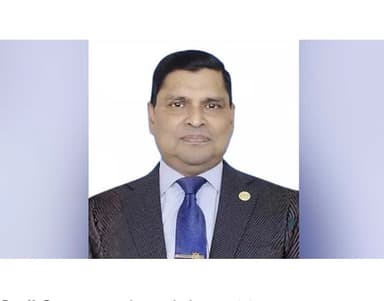
Professor Md. Murshid Aktar is the Head of Department of Economics at Chowmuhani Government Saleh Ahmed College. He can be reached at mmaktar@gmail.com