

Published :
Updated :
 For all latest news, follow The Financial Express Google News channel.
Brazil is learnt to have launched a single-dose anti-dengue vaccine last Wednesday (November 30) after obtaining its registration approval by the county's drug regulator, Anvisa. Developed by Butantan Institute in Sao Paulo, the vaccine called, Butantan-DV, is claimed to be the world's first single-dose anti-dengue vaccine. Brazil's Minister of Health, Alexandre Padilha, announced the launching of the vaccine. Now, if Dengvaxia, developed by the French pharmaceutical company Sanofi, or more specifically its vaccine division, Sanofi Pasteur, is considered to be the world's first anti-dengue vaccine approved in 2015, then
Butantan-DV becomes the world's third anti-dengue vaccine after Japan's TAK003 vaccine, also called QDENGA, developed by the Takeda Pharmaceutical Company, occupying the second place. But if single-dose vaccine is the criterion, then Brazil's Butantan-DV becomes the world's first single-dose anti-dengue vaccine.
The vaccine, according to reports, was developed through a partnership between the Brazil's ministry of health and the Chinese company, Wuxi Vaccines.
Though the French Dengvaxia was the first anti-dengue vaccine, it is not at present recommended for general application as there are safety concerns. Also, its usage is limited. For instance, if a person had no previous history of dengue infection, then application of Dengvaxia might lead to severe dengue infection, even hospitalization. So, WHO, European Medicine Management (EMA) and the US Food and Drug Administration (FDA) restricted the vaccine's use only to those individuals who had a prior history of dengue infection and were natives of regions where dengue is endemic. Against this backdrop, Sanofi Pasteur stopped producing Dengvaxia from January 2024 on the ground that there was no global demand for the vaccine. However, Japan's QDENGA (TAK003), came forward to meet the global demand as it could be applied regardless of a person's previous exposure to dengue. Some countries including those in Europe gave TAK003 broad approval for use. However, TAK003 is a two-dose vaccine meaning that after administering its first dose, a second dose has to be applied after three months.
However, now that Brazil has come up with its Butantan-DV as a vaccine that does not require any second dose as a preventive against all the four serotypes of dengue, then it is going to be a tough competitor of TAK003 or QDENGA.
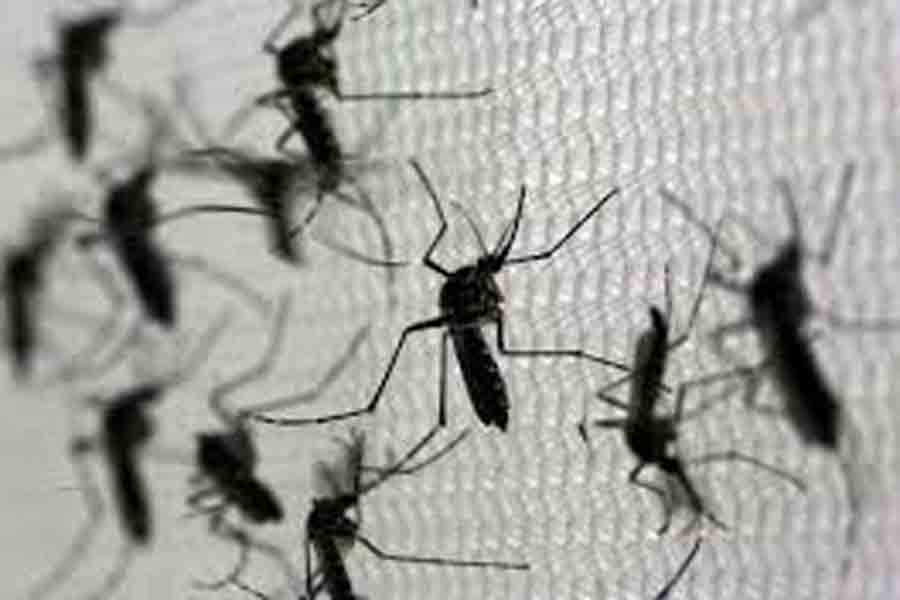
Notably, dengue is caused by four different virus serotypes: DENV-1, DENV-2, DENV-3, and DENV-4. Serotypes are the different strains of dengue virus. One million units of the Butantan-DV vaccine are reported to be made available for free through the Brazilian public health network, SUS. It will be ready for distribution in 2026. The vaccine's developer Butantan Institute estimated that more than 30 million doses of the vaccine could be produced by mid-2026. Since dengue has been rapidly expanding globally, particularly among the tropical countries, the Brazilian anti-dengue vaccine may well be made available for people living in other parts of the world that are endemic to the disease. The wide application of the anti-dengue vaccine cannot be overemphasized seeing that the disease is spreading fast through its vector mosquito, Aedes aegypti, thanks to the rise in temperature and shifting pattern of rainfall as a fallout from the climate change.
Admittedly, dengue fever has meanwhile emerged as a major public health concern in Bangladesh with a surge in the number of cases as well as fatalities in recent years. According to the Directorate General of Health Services (DGHS), till Sunday (November 30) last, the total number of dengue-related deaths in Bangladesh rose to 382 and the number of cases has climbed to 94,402. To all appearances, the government is fighting a losing battle against dengue. So, it is high time it considered introducing the anti-dengue vaccine as a preventive against the disease which is taking its toll unchallenged every year.
sfalim.ds@gmail.com