

Published :
Updated :
 For all latest news, follow The Financial Express Google News channel.
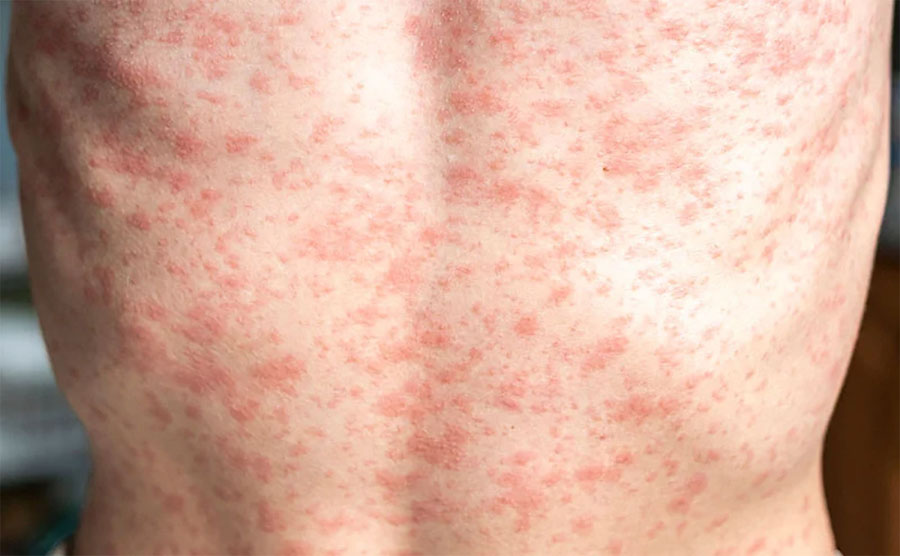
Measles in Bangladesh that has reached epidemic proportions actually started in January this year from Rohingya refugee camps in Cox's Bazar. Now the disease has spread to 58 out of 64 districts in the country. The World Health Organization (WHO) has described the country's measles outbreak as 'a reversal from Bangladesh's previous progress towards measles elimination'. But how could Bangladesh which was once an example of success in children's immunization programme has turned into a hot spot of measles? The breakout of the immunization programme started with the change in government through student-led mass upsurge in July 2024. It caused disruption, among other things, to the prevailing mass immunization campaigns. The interim administration that later took office stopped procurement of the measles vaccines through UNICEF. Prior to that the routine vaccination programme of administering two doses of measles-rubella (MR) to children of 9 months to 15 months of age, supplemented by nationwide campaigns every four years to cover any children that were missed and reach 95 per cent coverage- the threshold needed to prevent outbreak-faced disruptions since the Covid-19 pandemic. The system significantly faltered in the following years with a major national vaccination campaign scheduled for 2024 being cancelled. The contributing factors to the irregular immunization included declining coverage of measles vaccination among 12-month-old children. In fact, it fell from the pre-pandemic stable level to 86.6 per cent in 2024 and then dropped sharply to 59.6 per cent in 2025. It may be recalled that the last national measles-rubella (MR) catch-up campaign, designed to mop up unvaccinated children, was held in 2020. A subsequent campaign planned for 2024, as noted earlier, was cancelled amid the political turmoil. So far, UNICEF had been supplying the vaccines, while the funding for procurement of the vaccine was provided by the Global Alliance for vaccines and immunization, in short, Gavi. The government, too, had its contribution to the programme. But in September 2025, the interim government halted the arrangement of vaccines procurement through UNICEF and in its place introduced an open tender-based system. In this arrangement, the government invites suppliers to participate in the bidding by quoting their prices for vaccines.
The government later evaluates the would-be suppliers' quotations before placing orders. However, UNICEF reportedly strongly opposed that move by the then-interim government fearing it might disrupt the existing immunization system leading to a measles outbreak. But as expected, the tendering process to procure vaccines fell into the trap of bureaucratic tardiness. As a result, the supply of vaccines dried up leading to nationwide stockouts. All this hampered the routine immunization campaign, which was originally planned for 2024, but postponed to 2025 and ultimately cancelled amid political instability. Unsurprisingly, we have now the worst outbreak of measles in recent history. The rapid transmission of the measles epidemic has taken place in a fertile ground as malnutrition among children is rife in Bangladesh with 28 per cent of its under-5 children being stunted, while10 per cent is suffering from wasting. Small wonder that the situation has contributed to the rising rate as well as severity of the disease (measles) and attendant fatalities. There is also vitamin A deficiency, which weakens defence against the disease among children. Notably, the country missed three of its biannual vitamin A distribution campaigns, says experts. The good news is, the incumbent BNP-led government has reinstated the original system of procuring vaccines through UNICEF and since early April launched a vaccination campaign among children aged 6 months to 5 years in high-risk areas. And, since April 20 has started a nationwide campaign to vaccinate 18 million children. The DGHS, so far till yesterday confirmed measles-related deaths at 50 and suspected fatalities at 244. Given the high rate at which measles is now spreading, experts fear, the emergency vaccination campaign now in force is unlikely to stop the epidemic shortly. Even so, let us hope for the best.