

Published :
Updated :
 For all latest news, follow The Financial Express Google News channel.
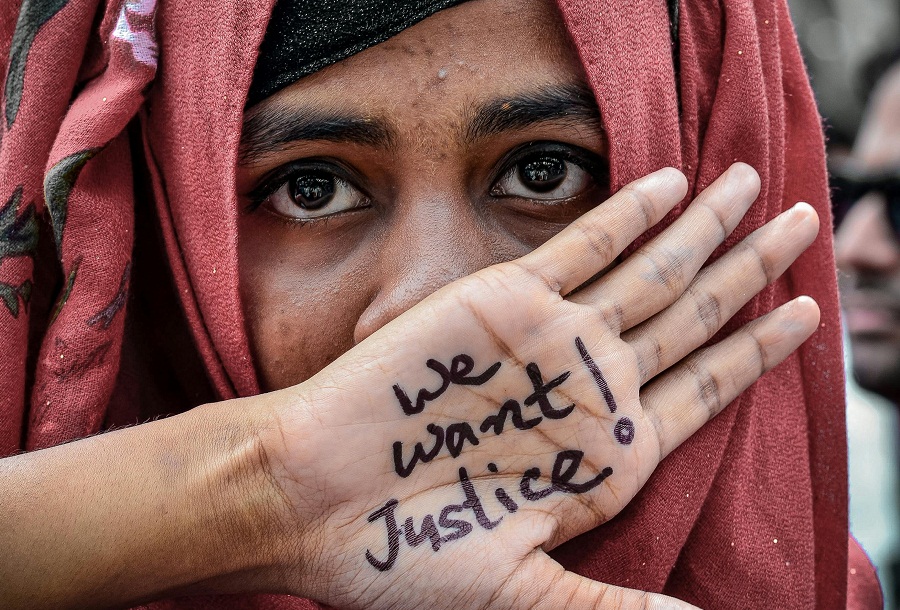
Every single year on Women's Day, we see social media posts, special advertisements, and campaigns about women's empowerment. Public figures share messages of respect and equality. Institutions hold discussions about women's achievements. But the next Day, women continue to face harassment on the streets and violence inside their own homes. Every year, the eighth of March comes and goes, yet the reality for many women remains unchanged.
Bangladesh has made progress in many areas related to women's participation. Women are working in every sector. They lead households and contribute to the economy. Yet violence against women continues to appear in news reports with troubling frequency.
Recent incidents of rape, including cases involving children, have raised serious concerns across the country. Reports of domestic violence remain widespread. Many women face abuse from husbands or in-laws within their own households. These are not isolated incidents, but rather reflect deeper social attitudes that shape how society responds to violence against women.
Globally, nearly one in three women experiences physical or sexual violence in her lifetime. Much of this violence occurs not in unfamiliar places but within homes and families. In Bangladesh, many such cases remain hidden. Women are often advised to remain silent to protect family reputation or social standing. Society often searches for a reason to hold women responsible for the violence committed against them.
In most crimes, responsibility is clear. If someone steals from another person, the blame lies with the thief. Society does not question why the victim carried a wallet or a phone. The act of theft defines the criminal. Yet in cases of sexual violence or harassment, the logic often changes.
Questions are asked why women are not careful; why they have to avoid certain places instead of ensuring their safety.
In the film Highway, the character played by Alia Bhatt reveals that she was sexually assaulted by a family member when she was a child. The story resonated with audiences because it exposed a truth many prefer to ignore. When the victim is a child, arguments about clothing or behaviour collapse entirely. The responsibility lies solely with the abuser.
Domestic violence as well highlights this reality. Many women experience abuse inside their own homes. The perpetrators are often husbands, sometimes parents or close relatives. Yet these cases frequently remain hidden.
Families may discourage women from seeking justice. In some cases, women continue to live with the person who has harmed them. They may not fully recognise the extent of the abuse they face. Others remain in violent relationships due to social pressure, financial dependence, or concern for their children.
In other situations, women may struggle to seek justice, facing violence outside the home, because legal processes can be long and socially difficult. Survivors often encounter judgment rather than support.
Society then labels these women as 'strong' or 'survivors.' While these words are meant to show respect, they also raise a deeper question. Should a woman have to become a 'survivor' of violence to be admired? Should she not simply have the right to live her life without facing such experiences in the first place?.
Long before independence, social expectations placed strict boundaries on women's lives. Women in many communities were expected to remain within the domestic sphere. Rigid expectations also shaped Widowhood. If a woman lost her husband, she was often expected to remain unmarried, regardless of whether she became a widow at a very young age.
Despite many movements, many of these efforts still framed women as individuals who needed protection rather than equal freedom.
After the creation of Bangladesh, legal reforms and educational opportunities expanded for women. Campaigns promoting girls' education and women's empowerment became common. Women entered universities, workplaces, and public institutions in greater numbers.
However, social attitudes often evolve more slowly than laws.
Many traditional beliefs about gender roles continue to shape everyday interactions. Women are still expected to carry the burden of preserving family honour. Their behaviour is closely monitored, while men's actions receive less scrutiny.
These patterns show that violence against women cannot be addressed by focusing only on women's behaviour. The problem lies in how men view and treat women.
From a young age, girls receive warnings about travelling alone, talking to strangers, or staying out late. These lessons are repeated in homes and schools. But similar conversations about respect, consent, and accountability are rarely directed at boys.
Boys must learn that women are equal members of society whose rights and choices deserve respect. Education about gender equality should begin early and continue through schools, communities, and public discourse.
Legal accountability is also essential as well. Bangladesh has laws against rape, harassment, and domestic violence. Yet enforcement remains a challenge.
More than a century ago, Bengali writer Begum Rokeya imagined a different world in her short story Sultana's Dream. In the story, gender roles were reversed, with women governing a peaceful, rational society. Crime and violence had disappeared because men were no longer the dominant force shaping public life.
The story was written as a satire, but it also carried a serious message. It questioned the structures that allowed inequality and violence to exist. Such a world may remain fictional. But a safer and more equal society is not beyond reach.
Women's Day provides an opportunity to celebrate women's achievements. Women's contributions in numerous fields and ttheireir wohavehas shaped the nation in many ways. Yet celebration without safety reveals a contradiction. Until the culture of blaming women changes, violence will continue to persist. The question should no longer be why women were outside, what they wore, or how they behaved. The real questions should be: why do perpetrators commit such acts, and how does society respond to them?
malihatasnim02215@gmail.com