

Aid is built for yesterday’s crises: Communities are building what comes next
Published :
Updated :
 For all latest news, follow The Financial Express Google News channel.
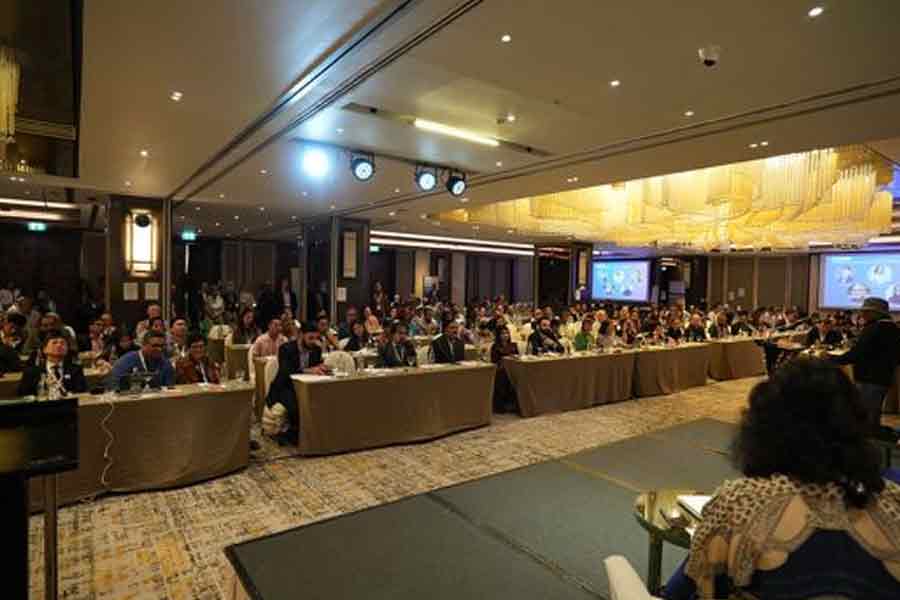
The humanitarian sector is running out of road. I write this from the Regional Humanitarian Partnership Meeting 2025, where actors from across the Global South are confronting a truth it is no longer possible to ignore: the world has entered an age of overlapping, fast-moving crises that our systems simply cannot keep up with. Climate shocks, protracted conflict, political fragmentation, and economic volatility no longer arrive one at a time. They collide, compound, and accelerate. The humanitarian architecture built for an earlier era is buckling under the weight.
Across the three days, a single message has come through with unusual clarity: reactive aid is no longer fit for purpose. Communities are facing risks that shift faster than our institutions can register. Early warning triggers, anticipatory action, predictive analytics, and AI-enabled foresight are no longer optional; they are essential to survival. Technology may help us see crises sooner, but it cannot replace humanity at the core of our work. Compassion cannot be automated, and dignity is not a data output.
This is why a basic principle must be restated forcefully: people must be treated with humanity. Recent crises have exposed what happens when that standard slips. Humanitarian space has tightened. Aid has been politicised. Painful double standards have determined who receives protection and who is quietly excluded. If we are serious about integrity, accountability cannot be selective. It must apply equally to governments, donors, international agencies, and local organisations.
Yet debates about “resetting” humanitarian aid too often sidestep the principles that define it. Humanity, impartiality, neutrality, and independence are not relics of an older system; they are the safeguards that prevent aid from becoming a political instrument. But in the rush to re-engineer the system—to streamline, securitise, and optimise—there is a growing risk that we dilute the very principles that give the sector its moral authority. Some reform proposals prioritise speed, cost-cutting, or state alignment in ways that threaten impartiality and erode commitment to humanity. The Core Humanitarian Standard and Sphere principles remind us that efficiency cannot come at the expense of dignity. A reset that compromises compassion is not a reset at all; it is a retreat.
Much has been said about shrinking humanitarian budgets, but the reality is more complicated. The money has not vanished; it has shifted, often into structures unable or unwilling to release it efficiently. Frontline organisations continue to face delays caused by rigid compliance requirements and bureaucratic barriers. What looks like scarcity is often the consequence of slow and inflexible systems. Resources exist. The architecture that guards them is outdated.
If the sector is serious about change, localisation must move beyond the rhetoric of transferring funds closer to communities. Localisation is about redistributing access—to knowledge, tools, standards, training, and decision-making. Donors who co-design solutions with local actors are demonstrating what responsible partnership looks like. But a strong humanitarian ecosystem cannot be built on short-term projects. It demands sustained investment in technical competencies, professional education, and leadership pathways within local and national organisations.
Still, localisation will never be realised through policy commitments alone. It becomes real when power actually shifts—when technical knowledge is shared rather than hoarded, when decisions are shaped with communities rather than imposed on them, and when young people—so often the first responders in their own environments—are treated as leaders, not tokens.
To reform humanitarian practice, we must situate it where it has always belonged: in the community. Communities possess the earliest crisis signals, the strongest reflex to act, and the deepest stake in recovery. They are not passive recipients; they are the system’s centre of gravity. Effective humanitarian practice does not trickle down from headquarters—it rises from lived experience. When communities lead, responses become more inclusive, more accountable, and more transparent.
But community leadership cannot thrive in a sector that remains fragmented and competitive. Turf battles between organisations drain resources, erode trust, and slow progress. Meaningful reform requires collective action: shared analysis, shared goals, and shared humility. Deeper dialogue with national authorities is essential to reduce friction and clarify roles. At the same time, local organisations must confront their own internal challenges, from talent loss to competitive behaviours that weaken cohesion.
Throughout the discussions this week, one value has surfaced repeatedly: empathy—not as sentiment, but as structure. An empathetic system rejects the paternalistic, top-down approaches that still shape humanitarian action. It refuses narratives that diminish national capacity. Empathy requires honesty about what humanitarian actors can and cannot do, and a commitment to long-term accountability to those most affected.
As the sector debates its future, difficult questions loom. Can we reach everyone in a world of multiplying crises? What does it mean to prioritise when time, resources, and attention are stretched thin? How do we balance speed with dignity, or innovation with ethics? These questions are not signs of decline. They signal a sector attempting to evolve with integrity.
This moment is more than a technical pivot. It is a political and moral one. We are being asked not only to deliver aid differently, but to rethink how power, resources, and knowledge flow—to rebuild trust by placing communities, not institutions, at the centre of humanitarian action. If we uphold accountability without exception, invest in capabilities at every level, and build partnerships grounded in fairness rather than control, a different humanitarian future becomes possible: anticipatory, collaborative, and meaningfully human.
The writer is the Country Director, ActionAid Bangladesh. She can be reached by email at farah.kabir@actionaid.org