

Published :
Updated :
 For all latest news, follow The Financial Express Google News channel.
Mr Mohammad Aalvee, who lives near Pallabi Metro Station, says the Dhaka Metro has made his life easier: “Now I can travel to the old part of Dhaka for my business activities quickly and conveniently. The fare is also reasonable.” However, he faces “rush-hour overcrowding, long queues at ticket offices, and the unavailability of services after 10 pm”.
Currently, the metro serves only one corridor but has already improved mobility for many. This early success shows how expanding the network—while managing costs and linking it with other transport modes—can improve physical access and mobility across Dhaka.
Dhaka’s transport issues stem from rapid, unplanned growth; concentrated jobs and housing; fragmented governance; chronic underfunding; weak regulation; and cultural habits such as owning cars for status. These factors cause traffic congestion, unreliable public transport, more road crashes, pollution, and social exclusion. Addressing them requires coordinated governance, stable funding, smarter land use, better demand management, stronger enforcement, safe walking and cycling infrastructure, and faster improvements to public transport so that people shift from private cars and emissions are reduced.
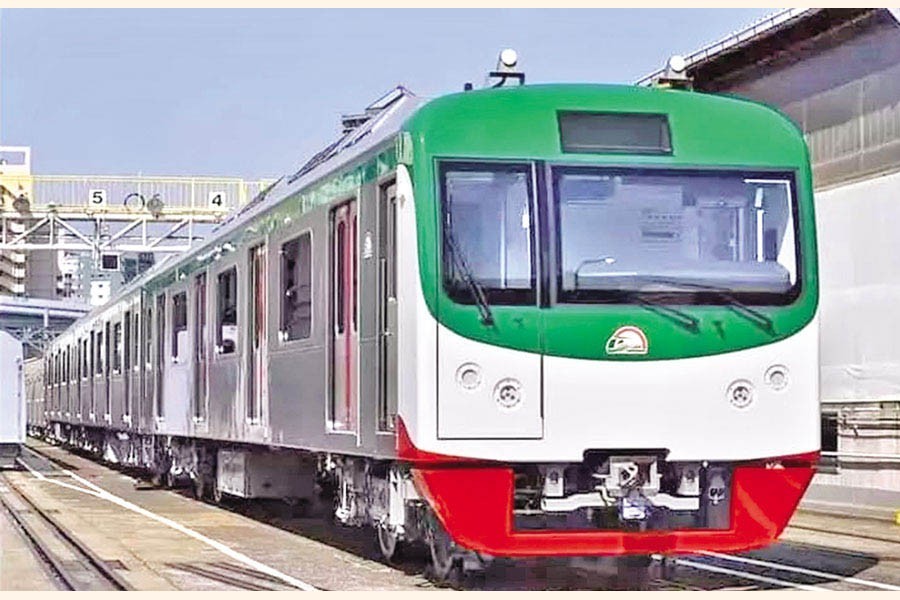
Dhaka’s metro is designed to be a fast and reliable mass-transit backbone for the city. It aims to reduce congestion and pollution, connect homes and jobs, and make travel quicker. The metro can modernise mobility and improve accessibility if it is well connected across the city, guides land use, and is fully integrated with buses and other transport modes.
Dhaka plans a six-line metro network (approximately 130 km by 2030). Line 6 (21 km) is operational, with 16 stations and an extension under way. Other lines are in procurement, design, or land acquisition stages. Challenges include high costs, construction risks, complex urban works, land acquisition and resettlement delays, traffic disruption, and unsatisfactory procurement outcomes. Stronger governance, smarter financing, local capacity, and integrated planning are needed to complete the network and make it work for all.
An analysis shows that Dhaka Metro Line 6 is far more expensive than Indian metro systems. Line 6’s fully elevated alignment costs Tk 1,575 crore (US$126 million) per km in 2024 prices. Delhi and Chennai spent only US$32–44 million per km (in 2024 prices). Dhaka’s cost is approximately three and a half times higher. Even Mumbai’s fully underground Line 3, at US$74 million per km, is cheaper. These differences highlight serious cost challenges for Dhaka.
Experts say Line 6 is costlier because it is the first project, development partners imposed limited bidding and specifications, soil conditions are poor, groundwater levels are high, land acquisition has been slow, systems are imported, and designs are non-standard. Costs can be reduced through standardised designs, competitive bidding, local assembly, utility mapping, and stronger contracts, as global experience shows.
The Metro Rail Act 2015 sets the rules for Dhaka’s metro system but contains key gaps. The Dhaka Transport Coordination Authority (DTCA) oversees the system, while the Dhaka Mass Transit Company Limited (DMTCL) builds and operates it, creating blurred responsibilities over licensing, fares, assets, and enforcement. The law lacks an independent regulator, secure maintenance funding, and integration with buses, walking, cycling, parking, and land use. These gaps slow decision-making and weaken accountability. Cities such as Delhi and Singapore demonstrate the value of clear institutional roles, strong regulation, and performance standards. Dhaka needs similar clarity and integration.
Dhaka’s 130 km metro plan by 2030 is overly ambitious. Line 6, at just 21 km, took more than six years to build. The remaining network is estimated to cost US$24 billion (Tk 288,000 crore)—roughly 6% of Bangladesh’s 2025 GDP. This will be difficult for the country, especially amid global risks arising from ongoing conflicts, including higher energy and food prices, tighter financial conditions, currency pressures, and fiscal stress. This suggests the following policy priorities: (a) setting a realistic, phased timeline; (b) focusing on high-impact corridors and considering cheaper options, such as BRT or light rail, for lower-demand routes; and (c) securing low-cost loans and guarantees from multilateral development partners.
Recent reports by the BBC and The Economist highlight a major challenge faced by Indian metro systems: low ridership. India spent US$26 billion on 1,000 km of metro lines across two dozen cities, yet many carry only 20–50% of their expected passenger numbers. Causes include high fares, poor last-mile connectivity, weak bus integration, poorly located stations, safety concerns—particularly for women—and overestimated forecasts. The lesson is clear: metros alone cannot solve urban transport problems. Other elements of the urban transport ecosystem must function effectively alongside metro systems to deliver the best mobility outcomes.
For Dhaka, this raises several key policy questions: Are ridership forecasts realistic? Are fares affordable? How will last-mile connectivity and bus integration be improved? How will monitoring and accountability be ensured? And to what extent can standardised designs, competitive tenders, and diverse financing instruments reduce costs and accelerate delivery?
It is still too early to judge Dhaka Metro’s long-term ridership performance. Line 6 currently carries between 400,000 and 420,000 passengers daily. DMTCL aims to reach 1.3 million daily riders by 2051, equivalent to a peak passenger-per-hour-per-direction (PPHPD) figure of 61,000. Achieving this target would require annual growth of around 5% over 25 years. This appears feasible because Line 6 serves a densely populated urban corridor characterised by low car ownership and heavy public transport use. In addition, average station spacing of 1.25 km and extensive feeder services improve accessibility. Overall, the existing transport ecosystem is supporting strong ridership growth on Line 6.
An analysis suggests that two planned Dhaka metro corridors may experience lower demand: Line 4 (Kamalapur–Madanpur) and Line 5 North (Hemayetpur–Vatara). Their projected PPHPD figures are only 17,000 (2065) and 36,500 (2058), respectively, which may be insufficient to justify full metro systems. Given the high costs and lengthy delivery periods, DMTCL could consider cheaper and faster alternatives. BRT and light rail can effectively serve medium-demand corridors (PPHPD 10,000–35,000) at significantly lower costs. Cities such as Mexico City use BRT on comparable corridors to deliver rapid and visible mobility improvements without constructing expensive metro lines.
Building on the metro’s early success and integrating it with the wider transport network, the government should adopt clear policies to ensure access to jobs and services, affordable fares, and sustainable mobility. Key priorities include: (a) strengthening DTCA—even if legal reforms are required—to plan, fund, regulate, and monitor transport, while clearly defining the responsibilities of builders, operators, and regulators; (b) prioritising high-impact corridors and phasing investments, while testing BRT or light rail on lower-demand routes to match transport modes to actual needs and save time and money; (c) standardising station and track designs and using open, competitive tenders to reduce costs and accelerate construction; (d) securing low-cost multilateral loans and guarantees without restricting fair procurement, thereby lowering borrowing and construction costs; (e) developing local skills and industries for metro design, construction, maintenance, and operations. A semi-knocked-down (SKD) approach—importing trains and systems for local assembly—could reduce import costs, create jobs, and facilitate technology transfer; and (f) monitoring ridership in real time and adjusting fares based on data to keep services affordable while covering operating costs efficiently.
Dhaka must turn the promise of metro rail into tangible results. Policy priorities include strengthening urban transport governance, phasing projects according to impact, matching transport modes to demand, standardising designs, building local capacity, securing affordable finance, and ensuring effective last-mile connectivity. Metro rail is only one part of the solution, not the entire solution. It must work alongside other transport system elements to provide safe, affordable, reliable, low-emission, and inclusive mobility that eases congestion, protects public health and the environment, and supports economic growth.
Farhad Ahmed is a retired Senior Transport Specialist at the World Bank, Washington, D.C. He is a trustee of the Human Capital Initiative (HCI). He can be reached at farhad.ahmed2011@gmail.com.