

Published :
Updated :
 For all latest news, follow The Financial Express Google News channel.
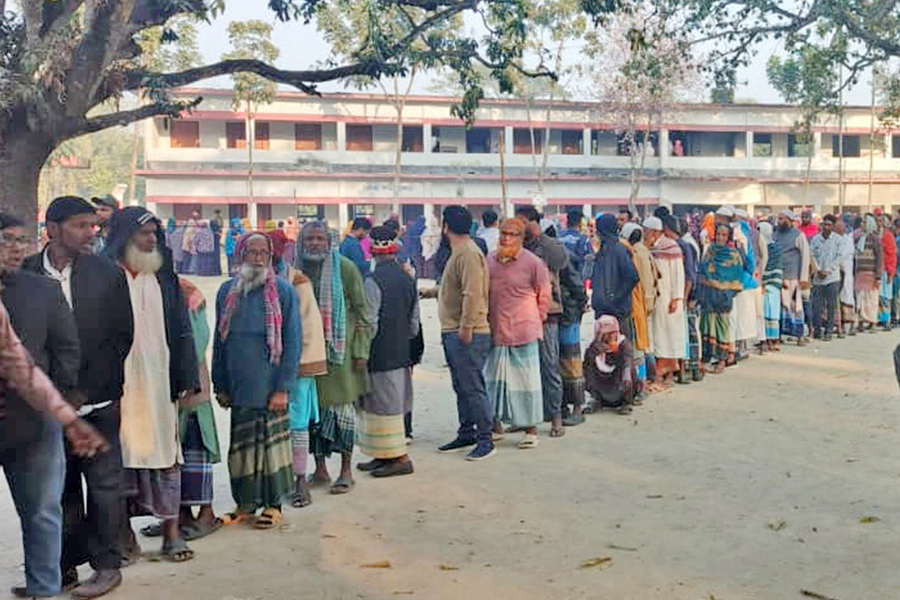
The Thirteenth Jatiya Sangsad (JS) Election has been held alongside a referendum on the question of reforming the governance framework. The election was held in a festive atmosphere across the country with spontaneous participation of people irrespective of their age, class, religion, or gender. Most observers have opined that it was held in a free, fair, participatory, and well-organised manner. The Election Commission as well as the interim government deserve our profound gratitude for that. Despite threats from the ousted Hasina regime, the voter turnout was almost 60 per cent, with over two-thirds of voters expressing support for implementation of the July-Charter of reforms. Besides, over two-thirds of seats have been won by Bangladesh Nationalist Party (BNP) led by Tarique Rahman - the eldest son of legendary political icons of the country - the declarer of independence Shaheed President Ziaur Rahman and the first female prime minister of Bangladesh Begum Khaleda Zia.
As the head of the interim government, Professor Muhammad Yunus rightly pointed out during his address to the nation prior to the election, "This election is not merely another routine election; It is the first national election after a mass-upsurge in the country. This election is a constitutional expression on the long-time deprivations, discriminations, and injustices perpetrated against the people. The demands of the masses on the streets are now being articulated through ballots. Therefore, this election is a historic milestone in the democratic journey of Bangladesh". Those who will assume office soon for running the country should always keep this backdrop in their minds.
Holding a free, fair, and participatory election after decades-long political unrest and controversies has not only been a constitutional process, it was also an effort to restore faith in democracy among the masses. The manner in which JS-poll was held after one and a half decades of electoral malpractices by the ousted AL-regime has undoubtedly opened up newer doors of expectations among the people. The role of the military and law-enforcement agencies have been commendable in restoring confidence among voters and creating a peaceful, disciplined, and favourable environment for voting.
Democracy is a continuous process and is not confined to mere casting of votes. People have not only elected their representatives through this election; they have also delivered their verdict on the path Bangladesh should follow in the coming months. The short, medium, and long-terms measures of the new government would indicate whether the country moves on a trajectory that establishes a discrimination-free, just, inclusive, and accountable Bangladesh, or returns to the old order of centralised power and abuses. As the British historian Lord Acton had pointed out long time ago, "Power tends to corrupt, and absolute power corrupts absolutely".
This historic election can also be termed as a triumph of the 2024 July Revolution, which evicted the deeply entrenched 15-year-long autocratic and fascist regime of Sheikh Hasina. Following that mass-upsurge, the people of Bangladesh now feel that reforms in state-structure, systems, and functions are urgently needed. Consequently, this 'revolution of ballots' is not merely a slogan, it is also an aspiration that seeks to fully integrate the voices of citizens in all matters, programs, and policies of the state in order to establish and uphold the spirit of democracy.
The new government will face numerous challenges after assuming office. The first challenge will be implementation of the July Charter within 180 days through parliamentary consensus. The opposition led by the Jamaate-e-Islami should play a constructive role in this consensus-building effort, as the party has recorded its best performance ever by winning around 70 seats. History has repeatedly shown that failure to arrive at consensus during critical hours of a nation often jeopardises democracy and gives rise to authoritarianism.
Reining in the bureaucracy will also be a big challenge, as it was massively politicised by the Hasina-regime over a long period, which promoted cronyism instead of professionalism. The divisions, schisms, and vested interests of bureaucracy will have to be addressed properly in order to make it more efficient, effective, and pro-people. Reforming and overhauling the civil service deserve special attention, as the success of the government will very much hinge on a loyal and supportive bureaucracy. Improving the law-and-order situation is also critical, as a culture of applying brute force against civilians and political rivals was institutionalised by the ousted AL-regime. Overall, the government will have to put emphasis on controlling indiscipline and violence in various spheres of society, economy, and polity, and maintain a balance between application of force and the rights of citizens.
Streamlining the economy will also have to be a priority task of the government. Investors' confidence will have to be restored in the backdrop of dwindling investments in the country during the past few years. Reforming the financial sector, improving trade balance through enhanced exports, achieving stability in foreign exchange reserves, containing inflation, and generating employment should be priority areas for policy interventions. As the younger generation played a crucial role in determining the outcome of the election, employment creation for the youths should be prioritised for maintaining social stability. The government should remember that it is not enough to frame plans; it would need a reformed, efficient, and dedicated bureaucracy for their proper implementation.
Another area that will need support of the new government is help flourish a vibrant civil society, which not only acts as critics of governance, but also helps ensure accountability of the government. Similarly, the freedom of the mass media will have to be ensured by encouraging neutrality and objectivity, as we have seen how partisan media-houses aided and abetted the rise and consolidation of fascism and mafia-rule in Bangladesh during the Hasina era.
In conclusion, we can safely say that the parliamentary election of February 12 has opened up enormous possibilities for Bangladesh. The people have delivered their verdict. It is now the responsibility of the political leadership to materialise their aspirations.
Dr Helal Uddin Ahmed is a former Deputy Press Secretary of Prime Minister Begum Khaleda Zia, and ex-Editor of Bangladesh Quarterly.
hahmed1960@gmail.com