

Published :
Updated :
 For all latest news, follow The Financial Express Google News channel.
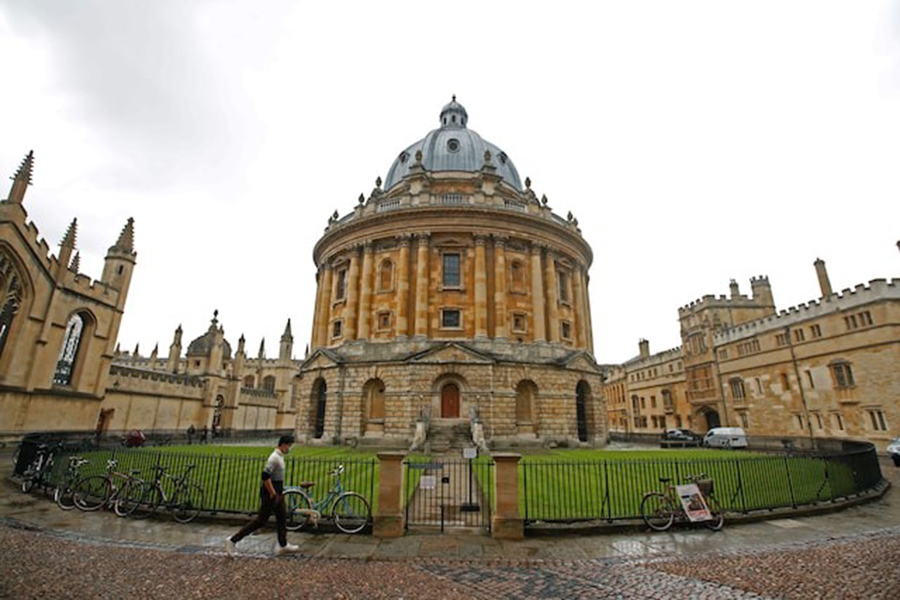
The prestigious universities of Oxford and Cambridge have both slipped out of the top three in the Times and Sunday Times Good University Guide rankings for the first time in the league table’s 32-year history.
According to the guide published on Friday, the London School of Economics and Political Science (LSE) retained top spot for the second year running, followed by the University of St Andrews in second. Durham University climbed two places to third, breaking the Oxbridge hegemony of the rankings for the first time and securing the title of University of the Year 2026.
Cambridge tied with Oxford in fourth place, the Times reports. While Cambridge led the table in 14 individual subjects and Oxford was named Medical School of the Year, both institutions were marked down in student satisfaction scores from the National Student Survey.
DURHAM'S RISE
Durham’s leap up the rankings was driven by significant improvements in how students rated teaching quality, jumping 30 places in one year, according to the Times. Vice-Chancellor Prof Karen O’Brien hailed the achievement and said: “Durham is an outstanding place to study. We ensure that every student can grow and thrive here. Our loyal, engaged alumni are testament to the impressive career prospects that await our graduates.”
Founded in the 19th century, Durham is England’s third-oldest university. The Times noted that the institution, located in a UNESCO world heritage city, combines a collegiate system with high academic standards.
Despite its success, Durham is not immune to the financial challenges facing UK universities. It must save £20 million over the next two years following an £8 million deficit, according to the paper.
LSE, ST ANDREWS HOLD STEADY
The LSE consolidated its lead with strong student satisfaction and a strong record of graduate employment, while St Andrews retained second place thanks to consistently high scores for student experience and research quality.
Helen Davies, editor of the Good University Guide, said: “Many more undergraduates are choosing to stay at home and commute. It is why this year we have an award for the top university in each region and the best for scholarships and bursaries.”
Regional winners included Durham for the North and North East, Cambridge for the East, Oxford for the South East, and Queen’s University Belfast in Northern Ireland.
CHALLENGES ACROSS THE SECTOR
The Times highlighted the financial pressures facing UK higher education, citing a report by the Office for Students earlier this year that found 43 per cent of universities were forecasting a deficit for 2024-25. Reduced international student recruitment, inflationary pressures and a long-standing freeze in tuition fees were all blamed for the strain.
As a result, many universities have lowered entry requirements, with the average UCAS tariff points falling from 135 to 132 this year. Some institutions are also restructuring courses, cutting staff, or pursuing mergers, such as the recent creation of City St George’s through the merger of London’s City and St George’s universities.
The full results will be available in a 96-page supplement with The Sunday Times on Sept 21, while the rankings can also be found online at thetimes.com/uk-university-rankings.