

Published :
Updated :
 For all latest news, follow The Financial Express Google News channel.
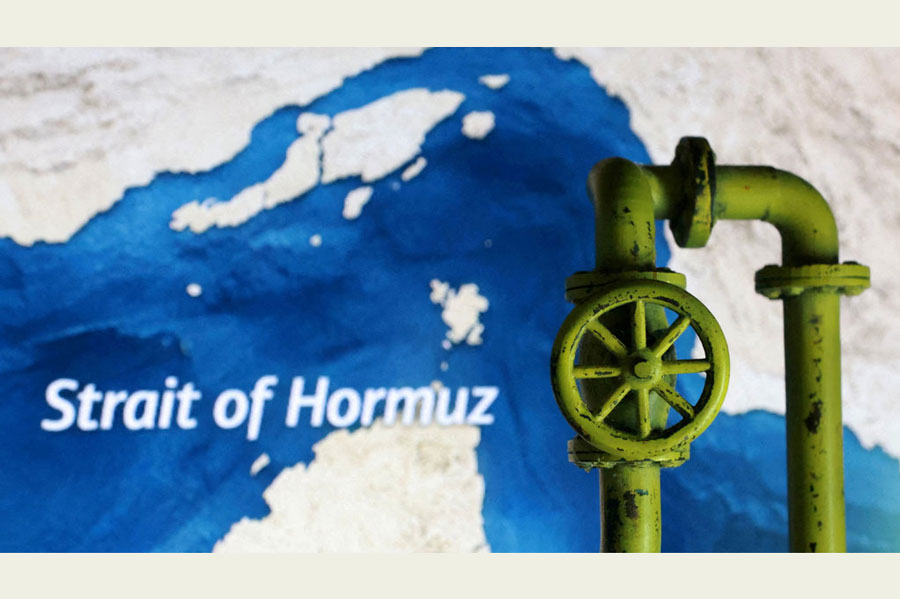
Shippers looking to revive the passage of tankers through the Strait of Hormuz were seeking clarity on the logistics, while refiners inquired about new crude loadings on Wednesday, in response to a ceasefire deal between the US and Iran.
Most stranded oil and gas tankers remained inside the Gulf, LSEG shipping data showed, hours after President Donald Trump announced the two-week ceasefire and said the US would help with the traffic build-up.
Iran's foreign minister, Abbas Araghchi, said that if attacks against it stop, Tehran would cease counter-attacks and provide safe passage in coordination with its armed forces "and with due consideration of technical limitations".
Ship tracker Kpler said some 187 laden tankers carrying 172 million barrels of crude oil and refined products were afloat inside the strait as of Tuesday.
With more than 1,000 ocean-going vessels trapped within the gulf, it would likely take more than two weeks to clear the backlog even under normal conditions, said Daejin Lee, global head of research at Fertmax FZCO.
"A 14-day window is simply too short to restore the level of confidence needed to fully unwind the embedded uncertainty premium - particularly for Arabian Gulf loading routes," he said.
Lee said details remained unclear, including what actions ships and charterers must take to gain passage.
"Many blue-chip shipowners may wait several days to ensure the ceasefire holds before committing vessels," he said.
Jakob Larsen, chief safety and security officer at shipping association Bimco, said the industry was awaiting technical details from the US and Iran.
"Leaving the ... Gulf without prior coordination with the US and Iran would entail heightened risk and would not be advisable," he said.
Wait-And-See
Iran blockaded the strait in response to US and Israeli attacks that started on February 28, all but closing the waterway through which 20 percent of global oil and liquefied natural gas cargoes transit, sending energy prices soaring and rattling economies and markets.
The ceasefire, announced about 90 minutes before Trump's deadline to reopen the strait, led to a plunge in oil prices.
Two shipbrokers said shipowners are likely to remain in a wait-and-see mode before allowing vessels to enter the Gulf.
Inquiries for very large crude carriers to load Middle East crude for Asia jumped on Wednesday with Asian refiners including Reliance Industries, Indian Oil Corp, Nghi Son Refinery and Petrochemical and CNOOC, as well as Abu Dhabi National Oil Co, Glencore GLEN.L and TotalEnergies, looking for vessels, three shipping sources said.
Glencore and TotalEnergies declined to comment. The other firms named did not immediately respond to requests for comment.
Danish shipping group Maersk said the ceasefire may create transit opportunities for vessels in the Strait of Hormuz, but that it did not yet provide full maritime certainty.
Indonesia's foreign ministry said it is working with Iranian authorities to secure the passage of two Pertamina vessels that have been stranded in the gulf.
"Several technical matters are being followed up to ensure safe passage through, including matters such as insurance and crew readiness," said ministry spokesperson Vahd Nabyl Achmad Mulachela.
China's foreign ministry said it hopes all parties make joint efforts to facilitate early resumption of normal trade through the strait, while Japanese Prime Minister Sanae Takaichi held talks with Iran's president.
Asian economies are the main buyers of oil shipped through the strait and have been hit especially hard by the disruption.
"We expect tankers and oil flowing to Iranian-friendly countries to be the first ones to transit," said Anoop Singh, global head of shipping research at Oil Brokerage.
"Most of the crude tankers will be allowed to pass," he said, adding that he expects more than 50 Very Large Crude Carriers and about 15 Suezmaxes to exit.