

GRADUATING LDCs
BD stresses extended transition periods within WTO
WTO MC14 starts amidst low expectations
Published :
Updated :
 For all latest news, follow The Financial Express Google News channel.
Amidst uncertainties on global trade and economy mainly due to the ongoing war in the Middle East, the 14th ministerial conference (MC14) of the World Trade Organisation (WTO) formally started in Yaounde, the capital city of Cameroon, on Thursday.
Trade ministers and negotiators from 166 member-countries of the organisation are attending the highest-level decision-making body of the WTO to reach a deal on some issues, although they keep their expectations significantly low.
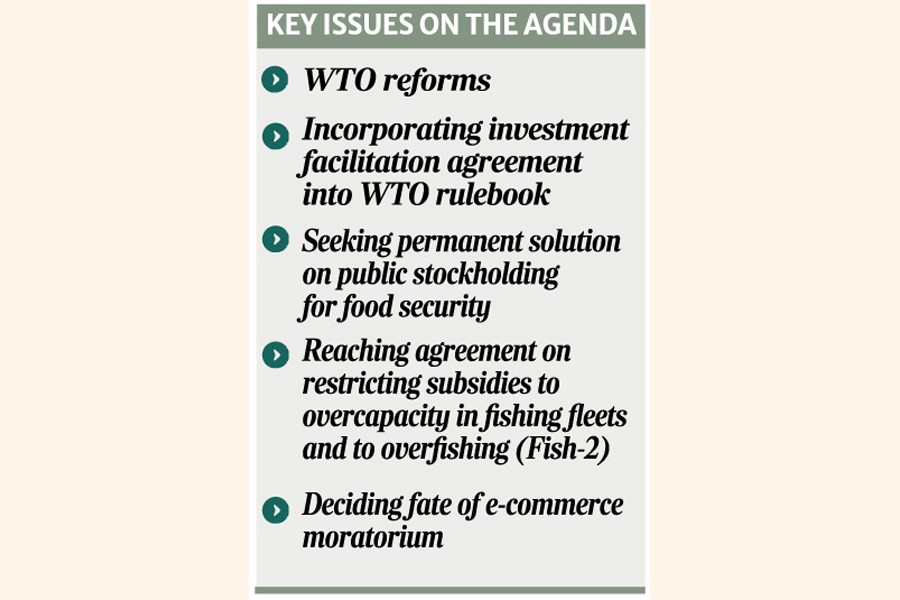
Key issues like reforms of the WTO, incorporating investment-facilitation agreement into the WTO rulebook, seeking a permanent solution on public stockholding (PSH) for food security, reaching an agreement on restricting subsidies to overcapacity in fishing fleets and to overfishing (Fish-2), and deciding the fate of the e-commerce moratorium, are set to dominate the negotiations in the four-day summit.
Besides these, issues of Least Developed Countries (LDCs) are also on the table as the group demanded continuation of LDC-specific trade preferences for the graduating LDCs like Bangladesh for a certain period of time.
Commerce Minister Khandakar Abdul Muktadir is leading the Bangladesh delegation at MC14.
The country is set to graduate from the LDC category by November this year, though the government has formally requested a three-year deferment from the UN Committee for Development Policy (UNCDP).
Regarding LDC graduation, the minister said that graduation from the LDC category marks an important milestone in the development journey of a country.
"While this achievement reflects the strength and progress of the economy, graduation will also bring considerable adjustment challenges," he added in his ministerial statement submitted to the WTO.
"A large share of our exports currently benefits from LDC-specific preferences and special and differential treatment provisions under WTO rules. The erosion of these benefits will create pressures for our export sectors and broader economy," he continued.
Terming smooth and sustainable graduation critically important, he called for extended transition periods and targeted support measures within the WTO framework, including continued access to certain flexibilities and capacity-building support.
"Such measures will help graduating LDCs preserve development gains, strengthen productive capacities, and integrate more effectively into the global trading system," he continued.
On WTO reforms, the commerce minister of Bangladesh said the country believes the reform process must be inclusive, transparent, and firmly anchored in the founding principles of the WTO.
"Reform must preserve consensus-based decision-making, ensure meaningful participation of smaller and vulnerable economies, and safeguard the policy space necessary for structural transformation and economic diversification in developing countries," he added.
Bangladesh also stressed the restoration of a fully functioning two-tier dispute settlement system, including the Appellate Body.
"The credibility of the rules-based system depends on an independent adjudicating system that safeguards the rights of all Members, even the smallest ones," added the minister's statement issued on Thursday.
A large number of civil society organisations, however, have already urged the WTO members to reject a "reform" agenda that would fundamentally undermine the organisation's development mandate.
Our World Is Not For Sale (OWINFS), a global network of organisations and activists working for reforms of the multilateral trading system to serve people and the planet, issued a statement in this connection on Wednesday.
It cautioned that the reform agenda now on the table would eliminate the WTO's non-discrimination principle and legitimise illegal US bilateral trade deals struck under threat of tariffs.
The global civil society network also warned that the proposed reforms entrench a governance model that allows powerful economies to dictate terms to the rest of the world through club-based plurilateral agreements.
Meanwhile, at the opening session of the MC14 on Thursday, WTO Director General Ngozi Okonjo-Iweala said, "We have work-filled and difficult four days ahead of us. It is now really up to you members to decide whether you want the organisation to continue or you want to pull it apart."
MC14 chair Luc Magloire Mbarga Atangana, commerce minister of Cameroon, presided over the opening session.
The four-day event is scheduled to end on Sunday.
asjadulk@gmail.com